
Barbados Real Estate for Sale
The Eastern Caribbean's most developed island and HNWI hub.
7 properties for sale in Barbados, lowest price first

One-Bedroom 5435, The Crane Private Residences, Barbados

Royal Westmoreland Royal Apartment, Barbados

Crane Private Residence 5122, Barbados

Crane Private Residences Phase 4 — Two-Bedroom, Barbados

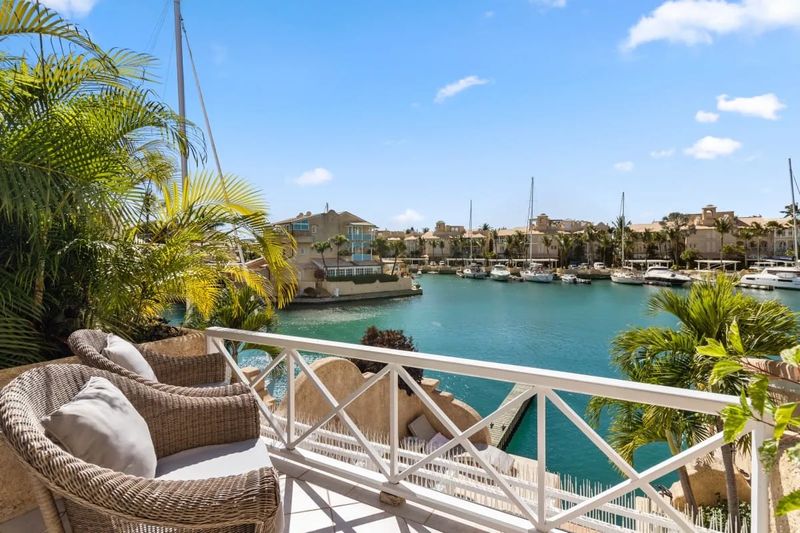
Port St. Charles Lagoon Townhouse, Barbados

Outer Penthouse 5464, The Crane Private Residences, Barbados

Royal Westmoreland Six-Bedroom Villa, Barbados
Living in Barbados: residency, not citizenship
Today, Barbadian property worth at least US$300,000 qualifies for the Special Entry and Reside Permit. New rules passed on 4 November 2026, not yet in force, add permanent residence for a $5,000,000 investment in an approved national development project; they do not say a home purchase qualifies. Source: Lex Caribbean in IFC Review, 12 September 2024, checked 9 Nov 2026; Immigration Bill, 2026, section 10, checked 9 Nov 2026.
How residency works in Barbados →
Moving to Barbados from Canada
Buying from Toronto or elsewhere in Canada? The purchase, the costs, closing from Canada and the currency are set out on buying property in Barbados from Canada; the residence routes, old and new, are on Barbados permanent residency. Leaving Canada itself is covered in leaving Canada for Barbados, and how tax residence, the Canada–Barbados treaty and departure tax fit together is on Barbados tax residency.
Moving to Barbados from the UK
The UK ended the remittance basis in April 2025; how Barbados taxes a resident who is not domiciled there is in after non-dom: Barbados residency for UK families. Barbados has also passed a new law, not yet in force, that grants permanent residence to investors: Barbados’ new golden visa explains what it costs and how long citizenship takes.

Why invest in Barbados
Barbados is the grown-up market of the Eastern Caribbean — the most developed island in the region, with the schools, private healthcare, infrastructure and direct UK, US and Canadian flights to support full-time life rather than a season of it. The property market has matching depth: west-coast estates have traded through decades of cycles, and the resale market has real liquidity by Caribbean standards. The buyers are a settled mix — British families with generations of history on the island, Canadians and Americans basing part of the year here, and remote-working founders who arrived on the Welcome Stamp and stayed.
The value case is specific. Unlike the program islands to the north, Barbados sells no passport — but it offers what they cannot: a fully-formed high-net-worth hub on the calm, Caribbean-facing Platinum Coast, paired with a genuine residency route and remittance-basis treatment for new residents who plan it properly. For families whose priority is quality of life and a stable, liquid asset rather than mobility, that is often the right trade. Dan makes the same argument in his note on why he keeps sending clients to Barbados over Dubai, and sets out the mechanics of buying here in his practical Barbados market guide.
- Most developed island & infrastructure
- Platinum Coast luxury (Royal Westmoreland, Apes Hill)
- Strong UK, Canadian & US demand
- Special Entry residency route
A short history of Barbados
Barbados sits east of the island chain, outside the arc, on its own limestone shelf. Portuguese sailors named it for the bearded fig, and when the English landed at Holetown in 1627 they found it uninhabited. That single fact separates Barbados from every island around it: there was no contested possession, no French period, no changing of hands. It was English, then British, continuously from 1627 to 1966.
Continuity produced institutions. The House of Assembly first sat in 1639 and has met ever since, making it the third-oldest legislative body in the Western Hemisphere, after Bermuda's and the Virginia House of Burgesses. It also produced the sugar model in its harshest form: Barbados was the first English colony to convert wholesale to cane, and the code its assembly passed in 1661 — An Act for the better ordering and governing of Negroes — was the first comprehensive slave code written anywhere, and was copied into the statute books of Jamaica, Carolina and Antigua. By the 1680s the island was the most valuable English possession in the Americas.
The plantations left a landscape of great houses and consolidated estates, and the west coast became a resort long before the rest of the region did — the Platinum Coast was a going concern in the 1950s. Sugar declined slowly rather than collapsing, and tourism and financial services replaced it without the sharp break other islands experienced.
Barbados became independent on 30 November 1966 and a republic, removing the British monarch as head of state, on 30 November 2021. It has never operated a citizenship by investment programme and has said it does not intend to. For a buyer, the inheritance is a professional class, a land register that has run without interruption for three centuries, and a market where the route in is residency and tax planning rather than a passport.
Sources: Parliament of Barbados · Encyclopædia Britannica, Barbados
Who is buying in Barbados now.
Four groups dominate the west-coast market, and they want different things. British families are the historic base — many with generations on the island — and the abolition of the UK's non-dom regime has pushed a fresh wave of them to look hard at a Barbados base, a shift Dan traces in his piece on the end of the UK non-dom. Canadians come for winter and, increasingly, for tax planning; Barbados sits on the short list Dan keeps of the best Caribbean bases for Canadians escaping the tax net. Americans arrive for lifestyle and a hedge, and a growing cohort of remote-working founders first touched down on the twelve-month Welcome Stamp, liked what they found, and converted the trial year into a purchase.
What unites them is that Barbados is a place they intend to use, not a filing address. That changes what matters: proximity to good schools, a hospital, restaurants and a marina outweighs a headline yield, and the resale liquidity of the west coast becomes part of the underwriting rather than an afterthought.

Sandy Lane, Royal Westmoreland and the Platinum Coast.
One stretch of calm, Caribbean-facing shore — roughly Paynes Bay through Holetown to Speightstown — carries most of the island's prime market, and it behaves differently from the rest of Barbados.
Sandy Lane & the beachfront estates
Sandy Lane is the anchor — the estate community around the hotel of the same name, where villas are tightly held, trade infrequently and often change hands off-market. Beachfront homes through St. James parish carry the coast's deepest premiums; what is genuinely available tends to move through relationships rather than portals, which is what the private dataroom is for.
Royal Westmoreland & the ridge
Royal Westmoreland, on the ridge above Holetown, is where most first purchases land — a gated golf-and-villa estate with resale villas, building plots and a managed rental program that keeps homes earning between visits. It spans the widest band of any single address on the island: a completed two-bedroom Royal apartment at US$629,000 is the accessible way in, while a six-bedroom fairway villa with golf-course and Caribbean Sea views sits at just over US$5.2 million. Known running costs and steady resale demand are why Dan starts most first-time buyers here.
Apes Hill & the marina at Port St. Charles
Two more addresses round out the prime map. Apes Hill is a 475-acre elevated community roughly 1,000 feet up in St. James, about seven minutes from Holetown, with views to both coasts, cooling breezes and a championship course at its heart — a golf-led estate where the course is the value engine and the buyer is usually a golfer. At the north end, on the water, the Port St. Charles lagoon townhouse at US$1.3 million is berth-side living inside one of the island's few true marina communities, a yacht moments from the terrace. Golfers weighing the island's courses will want Dan's complete guide to Barbados golf before they choose.
Beyond the west coast
The south coast around St. Lawrence Gap trades at a meaningful discount to the west and rents well year-round; the east coast is the wild Atlantic side — spectacular, largely undeveloped, and for most buyers better visited than owned. Cross-island availability sits with the current Barbados listings, and the west-coast estates are handled quietly, by appointment.
Developments & opportunities.


Residency, not citizenship.
One point of clarity first: Barbados has no citizenship-by-investment program, and no property purchase here carries a passport with it. The island's offer is residency. The Special Entry & Reside Permit (SERP) has a property-owner route — a qualifying purchase from US$300,000, so the home itself can do the qualifying work — alongside a high-net-worth tier of a US$2 million investment against a US$5 million certified net worth for applicants who prefer not to anchor to a single property. The twelve-month Welcome Stamp gives remote-working families a trial year first, with no minimum stay required to keep the permit once granted. Process, terms and the tax position live on the Barbados residency page; the practical point is that the purchase and the permit are best planned as one decision, not two.
Dan's advice usually runs in both directions at once. Families who need mobility pair a Barbados base with a citizenship purchase on one of the program islands to the north — the layered approach he describes as treating mobility as a portfolio. Families who want the region's most complete address often need nothing more than the permit. Barbados is not a zero-tax island and does not pretend to be — it trades on an extensive double-tax-treaty network and stability, the better fit for operating businesses and treaty-minded families. Buyers comparing hubs often look next at Bahamas real estate, the region's other no-CBI residency haven, or at the branded-residence supply in Antigua. Dan works the island buy-side: underwriting of what a west-coast villa actually costs to run and is likely to return, and quiet access, through the private dataroom, to estates that never reach the portals.

How a foreign buyer purchases here.
Barbados is one of the more straightforward Caribbean markets for a non-national. There is no bar on foreign ownership: property is held freehold, commonly through an offshore holding company for efficiency on a future sale, and the purchase runs through attorney-led conveyancing. Foreign buyers register the inbound funds with the Central Bank so the capital can be repatriated cleanly on a later sale — a formality your attorney manages, but one worth planning for from the outset. Closing costs follow a customary split, with the vendor typically carrying the agent's commission; Dan walks buyers through the current schedule line by line rather than working from a rule of thumb.
Financing is possible but rarely quick: local and regional banks lend to non-residents at conservative loan-to-values, and the timeline runs longer than buyers expect, which is why most west-coast purchases complete in cash and refinance later — the reality Dan sets out in his piece on getting a mortgage on a Caribbean villa as a foreigner. Opening a local account smooths everything downstream; Dan documents the current experience in opening a Caribbean bank account in 2026. If the plan is to let the villa when you are away, go in clear-eyed: the managed rental programs at estates like Royal Westmoreland work, but net returns are thinner than the gross headline — a gap Dan spells out in why Caribbean rental cashflow is harder than it looks.
What to weigh before you buy.
The counts against Barbados are the same ones that keep the market sensible. It is the most expensive island in the Eastern Caribbean, so a given budget buys less raw square footage than Grenada or Dominica would. It grants no passport, so a buyer whose real need is mobility is in the wrong place. Running costs on a west-coast villa — staff, insurance, pool and garden, association fees — are real and continuous, and hurricane-season cover is a line item, not a footnote. And as anywhere in the region, off-plan and rental math deserve scrutiny; Dan's broader cautions in the challenges of owning Caribbean property apply here as much as anywhere. None of this argues against Barbados — it argues for buying the right product, on the right coast, with the running costs underwritten before you sign.
Apes Hill, Royal Westmoreland and the beach.
Three addresses take most of the island's prime demand, and buyers rarely look at only one. They are different products rather than different prices for the same thing, and the choice usually comes down to how you will actually spend a Tuesday afternoon.
The two golf estates
Royal Westmoreland was established in 1994 and has several hundred properties built out, with its beach club at Mullins Bay. That three-decade head start is the whole of its argument: a long public record of what property there resells for, through good markets and bad.
Apes Hill sits higher and is newer. Its course closed in 2019 and reopened to members in November 2022, and the resort publishes no price list, so the resale evidence you can price against is correspondingly short. What it has instead is elevation — around a thousand feet, the highest-sited residential golf community on the island, and the only Barbados championship course rebuilt from the ground up and reopened in the 2020s. At that height the outdoor living is a different proposition from sea level.
If you play golf seriously and would rather be comfortable outdoors at three in the afternoon, Apes Hill wins on the living. If resale liquidity and a proven exit come first, the older estate and the beachfront have more transaction history behind them. Both positions are defensible. What is not defensible is buying the first and telling yourself you have bought the second.
Against the beachfront
Beachfront on the Platinum Coast costs more per square foot and carries salt exposure, storm-surge risk and a heavier insurance premium. A golf estate trades that away for setback, security, space and a course. Whether it is the right trade depends entirely on whether you will play. If you will not, you are paying an amenity premium for something you will not use, and inland non-golf Barbados is a great deal cheaper.
Two things to establish before you discuss price
- Which product you are being shown. Shared-ownership weeks are marketed on the golf estates alongside whole villas, at headline numbers a small fraction of a freehold price. They are not the same asset, they do not behave like one on resale, and a low headline sitting beside seven-figure villas has misled people before.
- Whether the developer is your competition. A new phase of serviced plots is selling at Royal Westmoreland — the first of three planned neighbourhoods, with infrastructure broken in 2025 and most of the first phase still unsold. New developer inventory sits directly across from owner resales, and a developer can price and package in ways an individual cannot.

What it actually costs, Barbados.
These are the charges set by government rather than by any development, which is why they belong here rather than on a listing. Every row appears on every country guide in this series, including where the answer is that the charge does not exist — a missing row is what makes two islands look comparable when they are not.
Read the who pays column first. A charge allocated to the vendor by statute is not your cost as a buyer, and getting that the wrong way round is the most common error in Caribbean cost estimates.
Buying
| Charge | Who pays | Amount | Basis |
|---|---|---|---|
| Stamp duty | depends on the development | Depends on the development | Conveyance stamp duty is a vendor charge. A buyer pays mortgage stamp duty only if financing. |
| Property transfer tax | depends on the development | Depends on the development | s.7(1) allocates PTT to the transferor — a genuine statutory allocation, not a custom. |
| Non-citizen land holding licence | — | NONE | Barbados has no alien landholding licence and no foreign-ownership restriction. But exchange-control permission from the Central Bank is mandatory, and registering inbound funds is what permits repatriating sale proceeds later. |
| Legal / conveyancing fees | buyer | Published scale | Unregistered land: BBD 1,000 up to BBD 25,000; 2.5% on the next BBD 75,000; 1.5% on the next BBD 100,000, tapering above. |
| Title assurance & registry fees | buyer | Not established | — |
| VAT on professional fees | buyer | 17.5% | Legal services are expressly carved out of the exempt financial-service category. |
Selling
| Charge | Who pays | Amount | Basis |
|---|---|---|---|
| Stamp duty (vendor's portion) | seller | 1% of consideration | BBD 10 per BBD 1,000. |
| Property transfer tax | seller | 2.5% | Charged only on consideration above BBD 150,000 where a dwelling or building is erected. Bare land is taxed from the first dollar, because the relief does not apply. Share transfers are caught above BBD 50,000, with a 2-year anti-fragmentation rule, so buying the SPV does not avoid it. No tax on a lease under 25 years. |
| Capital gains / land appreciation | — | Not levied | Land development duty applies only inside a designated special development area. |
Holding
| Charge | Who pays | Amount | Basis |
|---|---|---|---|
| Annual land tax — residential | owner | 0% up to BBD 400,000, then banded | Land Tax (Rate of Tax) Order 2024, S.I. 2024 No. 57. A 'villa' is taxed on 75% of improved value. Early-payment discounts apply. |
| Annual land tax — non-residential | owner | 0.95% of improved value | Unimproved/vacant land is charged 0.80% on SITE value. |
| Rental income, non-resident owner | owner | 25% withheld at source | Income Tax Regulations 1969, reg. 90A(1). |
| VAT on accommodation | owner | Sale of real property is an exempt supply | Standard rate 17.5%. |
Compiled from primary government sources and adversarially checked, August 2026. Rates are set by government and change; the figures that govern your purchase are the ones on a closing statement, confirmed in writing by an attorney acting for you before a deposit moves.
Barbados real estate, answered.
Is Barbados eligible for citizenship or residency by investment?
Residency, yes; citizenship, no. Barbados has no citizenship-by-investment program — its Special Entry & Reside Permit takes a qualifying property purchase from US$300,000, or a US$2 million investment alongside a US$5 million certified net worth, with the twelve-month Welcome Stamp as the usual trial year. See the Barbados residency page for the current process.
What does real estate in Barbados typically cost?
Across a wider band than most islands Dan covers. A completed two-bedroom Royal Westmoreland apartment opens the estate market at US$629,000, a Port St. Charles marina townhouse sits at US$1.3 million, and a six-bedroom fairway villa runs to just over US$5.2 million — while the finest Sandy Lane beachfront estates trade quietly off-market. Dan maps the right band to your budget on the first call.
Where should I buy on the west coast?
Royal Westmoreland suits most first purchases — gated, established, with golf, resales and a managed rental program. Apes Hill is the elevated golf alternative, and Port St. Charles offers berth-side marina living. Sandy Lane is the blue-chip beachfront address, tightly held and often off-market. Dan usually shows buyers several before they choose.
Does buying property in Barbados give me residency?
Not automatically — but it can anchor it. The Special Entry & Reside Permit includes a property-owner route from US$300,000, so a qualifying purchase can form part of the application, and many families run the twelve-month Welcome Stamp first while they decide. Dan plans the purchase and the permit together.
Can a foreigner buy property in Barbados, and how does it work?
Yes — there is no bar on foreign ownership. Property is held freehold, often through an offshore holding company, with attorney-led conveyancing and the inbound funds registered with the Central Bank so capital can be repatriated on a future sale. Most west-coast purchases complete in cash, as financing for non-residents is possible but slower. Dan walks buyers through the closing costs line by line.
How does Barbados compare with the citizenship islands?
Barbados is the more developed island — infrastructure, schools, healthcare, flights — but it grants residency, not a passport. The program islands to the north offer citizenship from far lower entry points; many families end up with both, for different reasons.
Is Barbados a tax haven?
No, and it does not try to be. Residents are taxed, but the island trades on an extensive double-tax-treaty network and stability — often the better fit for operating businesses and cross-border families. Tax residency is a deliberate step beyond the permit, planned case by case.
Barbados reading.

Barbados' New Golden Visa: Permanent Residence for Investors, and a Route to Citizenship in About Four Years
Barbados passed new immigration and citizenship laws in November 2026. What the investor route costs, how the points system works, and how long until citizenship. Not yet in force.
Read →
Leaving Canada for Barbados: What the New Residency Law Changes
Moving from Canada to Barbados in 2026: departure tax in plain terms, becoming non-resident, a Welcome Stamp first year, and what Barbados' new residency law changes.
Read →
After Non-Dom: Barbados Residency for UK Families (2026)
The UK ended the non-dom regime in April 2025. How Barbados taxes non-domiciled residents, the UK–Barbados treaty, and what Barbados' new residency law changes.
Read →
The Canada–Barbados Tax Treaty, Explained for Canadian Business Owners
How the Canada–Barbados treaty lets active-business profit reach a Canadian parent free of further corporate tax, and the rules that decide if it still works.
Read →
Antigua vs Barbados for Relocation and Tax Residency
Antigua’s zero tax is simpler. Barbados has the treaties and the non-dom remittance basis. Which holds up when you move — and where Nevis fits.
Read →
Opening a Barbados Bank Account as a Foreigner: Documents, Fees and Exchange Control
What it takes for a non-resident to open a Barbados bank account: the document checklist, the fees, the 2% FX levy and exchange control.
Read →
Everyone Says Dubai. Here’s Why I Keep Sending Them to Barbados.
Dubai has the tax headline and the millionaire count. Barbados has no capital gains tax, a dollar peg unchanged since 1975, and an improving credit rating.
Read →
Buying Property in Barbados: The Practical Guide
How foreigners buy in Barbados — the offshore-company structure, exchange-control registration, real transaction costs, and where to buy.
Read →
Thinking about Barbados?
Dan lives and works in the region. Request a consultation for a first-hand read on the market.
Request a ConsultationWant advice now? Speak with Dan.