
Secret Bay
A six-star, all-villa eco-luxury community on Dominica's cliffs — Relais & Châteaux, low-density, CBI-eligible.
- IslandDominica
- CharacterRelais & Châteaux eco-luxury
- OwnershipWhole & fractional villas
- RouteDominica CBI (qualifying units)
- FromUS$1,400,000 whole · US$220,000 fractional
Residences available.
Every unit currently on the book here, with what is off-market available on request.

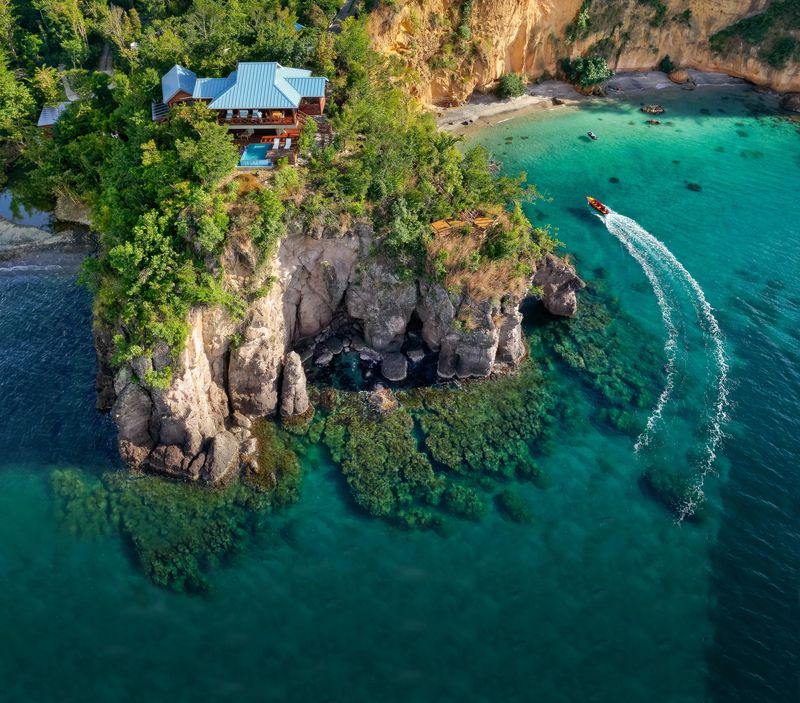
Waterfront Residences at Secret Bay, Dominica

Residences at Secret Bay

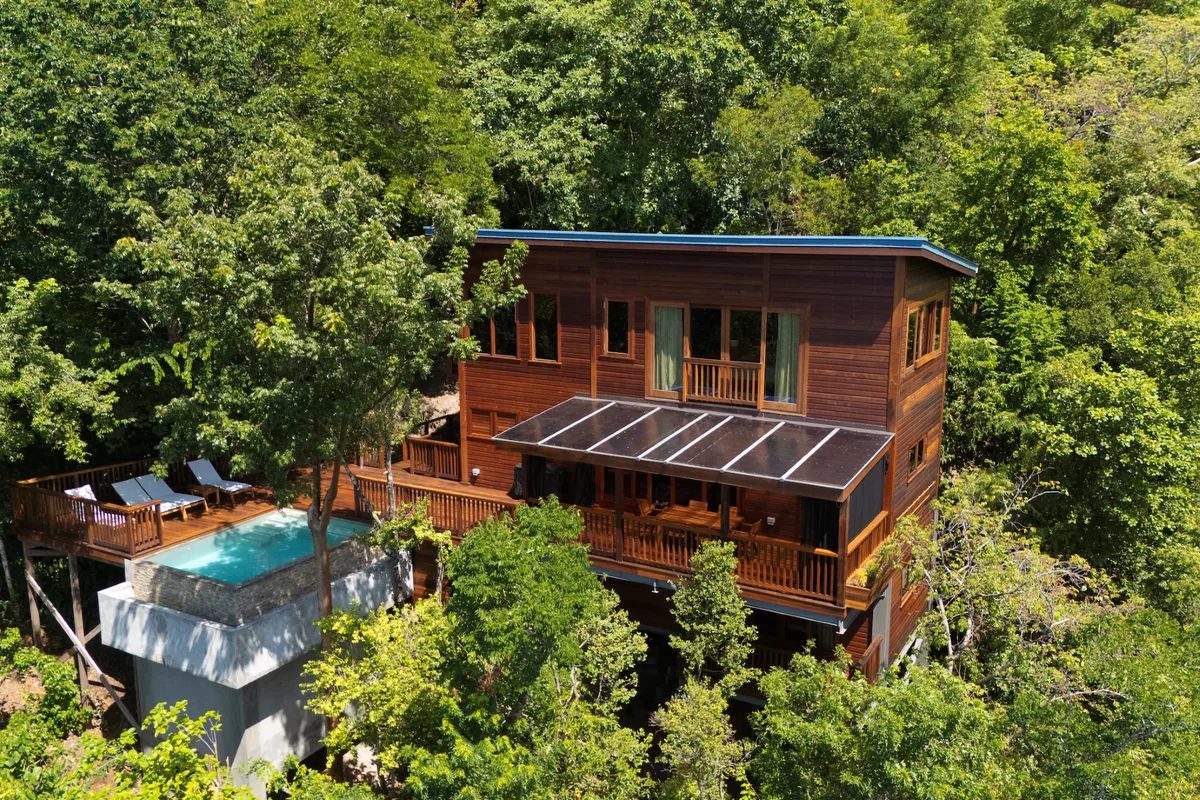
Residences at Secret Bay — Cliffside Kampesh II, Dominica

Residences at Secret Bay — Cliffside Ti-Fey II, Dominica

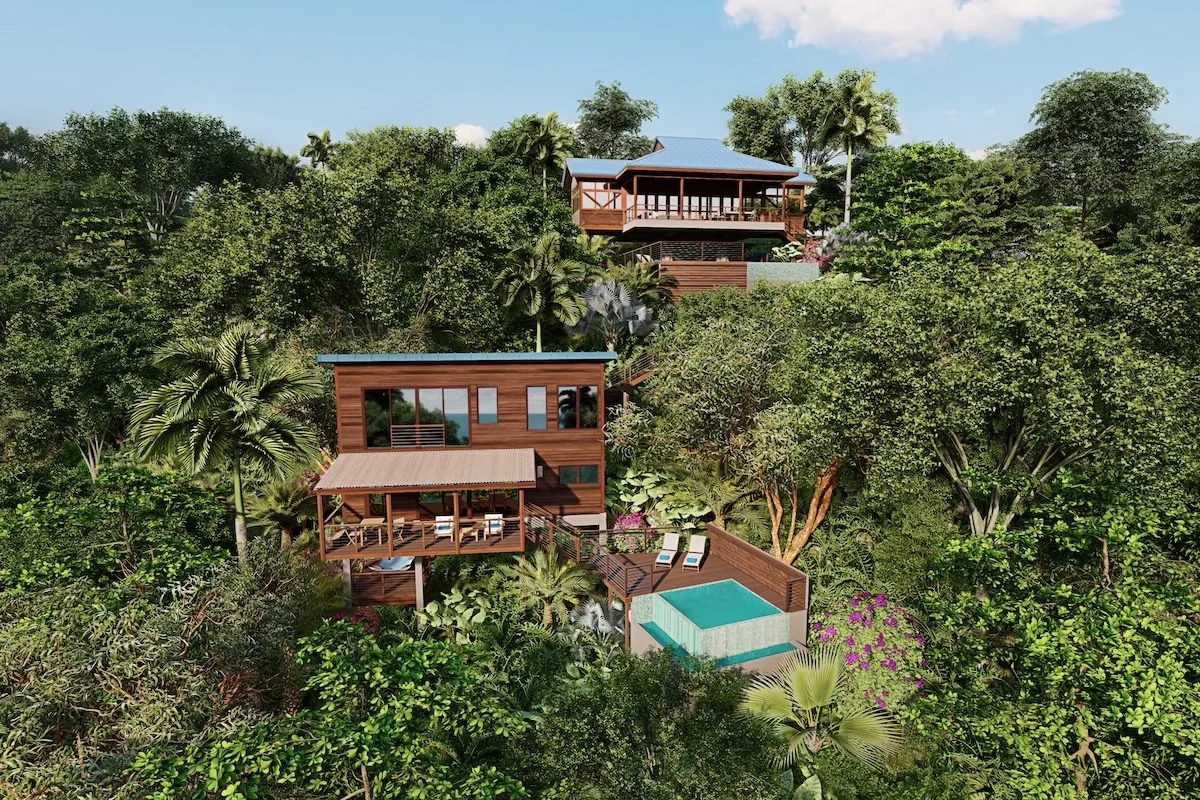
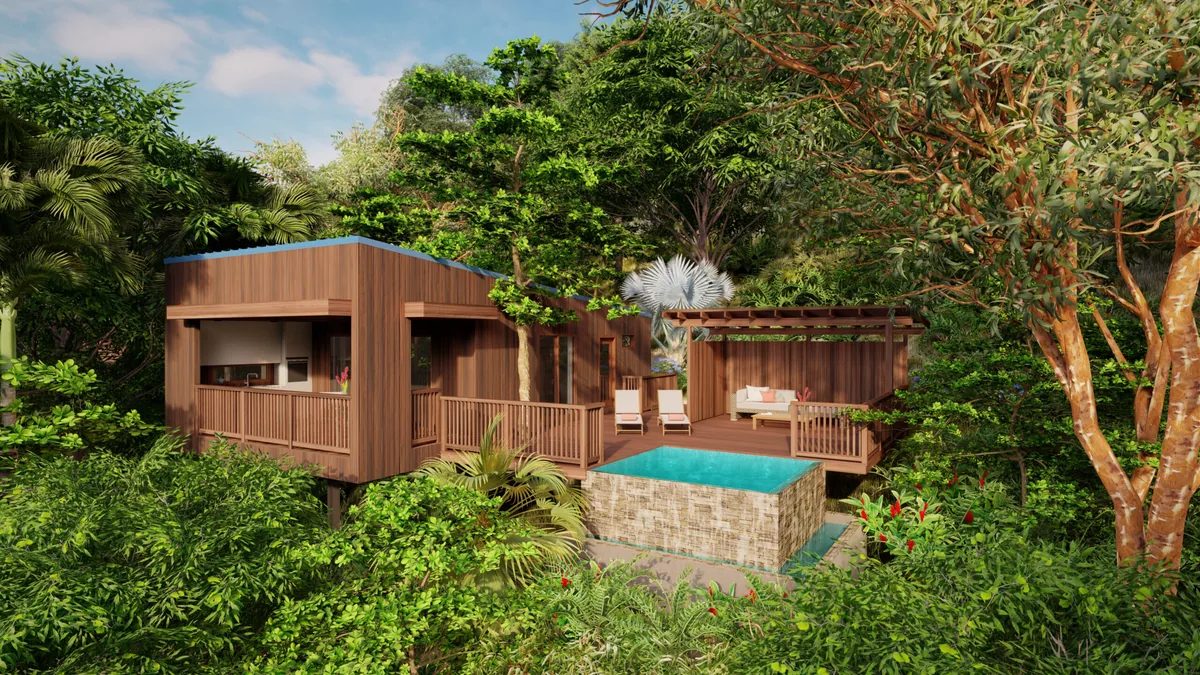
Residences at Secret Bay — Mapou Villa IV, Dominica

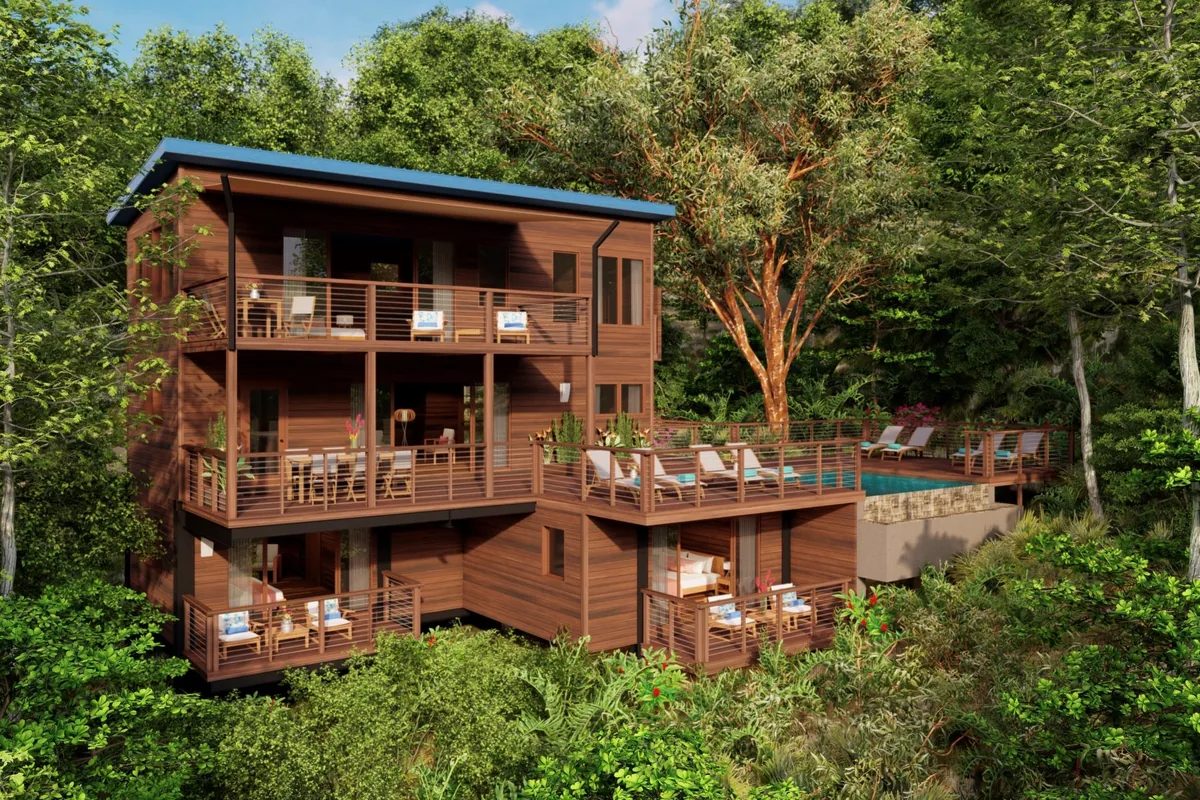
Residences at Secret Bay — Mapou Fractional, Dominica
Get the current price list for Secret Bay
Dan sends what is available now, including residences that are not advertised, with prices, floor plans and terms. He replies personally within one business day.
- Tell Dan what you have in mindBudget, timing and the kind of home. Two minutes, and it stays private.
- Get pricing and availabilityCurrent prices, what is genuinely available and what is coming, within one business day.
- Talk it throughA 30-minute call with Dan when you are ready. No fee, no obligation.
About Secret Bay
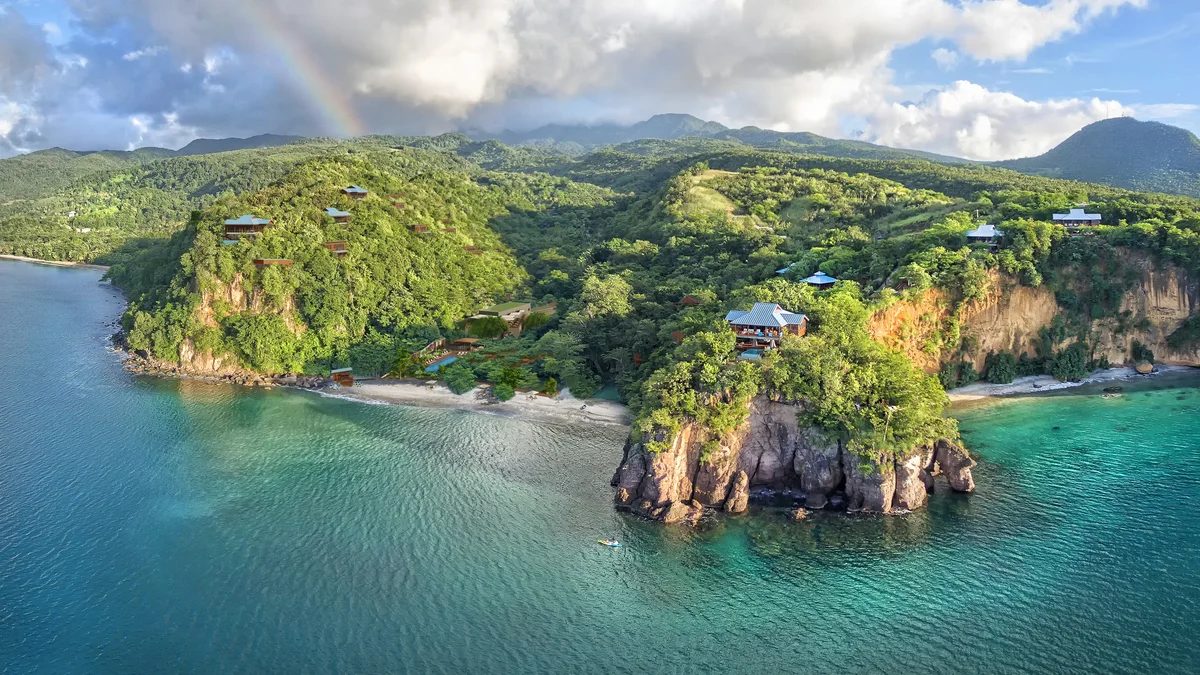
Secret Bay sits on a cliff above Tibay Beach near Portsmouth, on Dominica's north-west coast, and it is best understood as an argument rather than a resort. Dominica is the Nature Island — rainforest, 365 rivers, boiling lakes, no mass tourism, and until recently no airport capable of taking a jet. Almost every other Caribbean island sold its coastline. Dominica largely did not, and Secret Bay was built to suit that island rather than to import a template from somewhere else.
The result is deliberately, almost stubbornly, low-density. A handful of villas, each set into the forest with enough distance that you can genuinely go a day without seeing another guest. No sprawling lobby, no beach lined with loungers, no scene. It is Relais & Châteaux and Michelin-recognized, and it has spent years near the top of the region's critical rankings — but the thing that actually distinguishes it is restraint. Scale would break it, and the operators appear to understand that.
Read Dan’s full review of Secret Bay
Sustainability here is operating philosophy rather than marketing language: villas built into the topography instead of levelling it, local materials and labour, and a genuine relationship with Portsmouth as a working town rather than a service dormitory. For owners, that consistency matters. Eco-positioning that turns out to be a brochure exercise ages badly; this one has been maintained long enough to be credible.
The context, which any serious buyer should have front of mind: Hurricane Maria hit Dominica directly in 2017 and did catastrophic island-wide damage. Dominica rebuilt, and has since pursued a national resilience program, but this is a genuinely exposed island and any owner should look hard at construction standards, insurance cost and rebuild history before committing. Secret Bay's own recovery is part of its record, and worth asking about specifically.
The wider trade-off is Dominica itself. Access is via a short hop from a neighbouring island or the improved airport, and the island offers rainforest and rivers rather than long white beaches and shopping. Buyers who want a Caribbean of beach clubs and restaurants will be happier elsewhere, and I would say so plainly. Buyers who want somewhere that still feels like it belongs to itself tend to fall hard for it. The ownership tiers, pricing and CBI mechanics are on the development page.
Secret Bay is a 27-villa clifftop community above Tibay Beach, about ten minutes from Portsmouth on Dominica’s north-west coast, where rainforest runs to the edge of the headland. It is a Relais & Châteaux property, Green Globe certified, designed by the Venezuelan architect Fruto Vivas, and the resort says less than 7% of its land is marked for development. That last number is the most important fact about the place. It explains the appeal, and it explains why the inventory is small and unlikely to grow much.
The thing buyers get wrong is treating "Secret Bay" as one asset. It isn’t. Two quite different things share the address: a share at US$220,000, carrying two weeks a year and rising to US$1 million for ten, and whole villas quoted in the millions. Both are marketed as routes to a Dominican passport. Only one of them is a house, and even that one you cannot use whenever you like. Those three are worth pulling apart before anything else. The buyer who purchases a share expecting a holiday home, and the buyer who purchases a villa expecting free run of it, are both about to be disappointed, for opposite reasons.
The setting is the product, and it costs you something
Dominica is the Nature Island: rainforest, rivers, volcanic interior, almost no mass tourism and, so far, no airport that takes long-haul aircraft. Secret Bay was built to suit that island rather than to import a template. The villas are freestanding and set into the topography rather than levelled onto it. The resort describes the estate as two beaches, one reachable only by kayak, a funicular down from the welcome house, a treehouse spa overlooking Tibay Beach, and a wellness pavilion suspended over the Cario River. That is a fair account of what is actually there.
Access is the trade-off, and it is better heard now than discovered on arrival. Douglas-Charles Airport is about an hour away by road and takes regional aircraft, not transatlantic ones. Almost every guest connects through a neighbouring island. That may change: the Prime Minister’s office reported on 16 December 2025 that runway construction to formation level stood at 2,616 linear metres, or 91.8% complete, and the budget address of 4 August 2026 put completion of the new international airport in the second quarter of 2028. If it opens on time, the access story improves materially. If it slips, the island stays exactly as hard to reach as it is now, and you should buy on the assumption that it might.
The wider point is temperamental rather than financial. If your idea of the Caribbean is a long white beach, a beach club and somewhere to shop, you will be happier in Barbados or St Barths, and it is worth establishing that before you get on a plane. Buyers who want somewhere that still belongs to itself tend to fall hard for Dominica. There is no middle ground here, and pretending otherwise sells people the wrong island.
What you actually own at Secret Bay
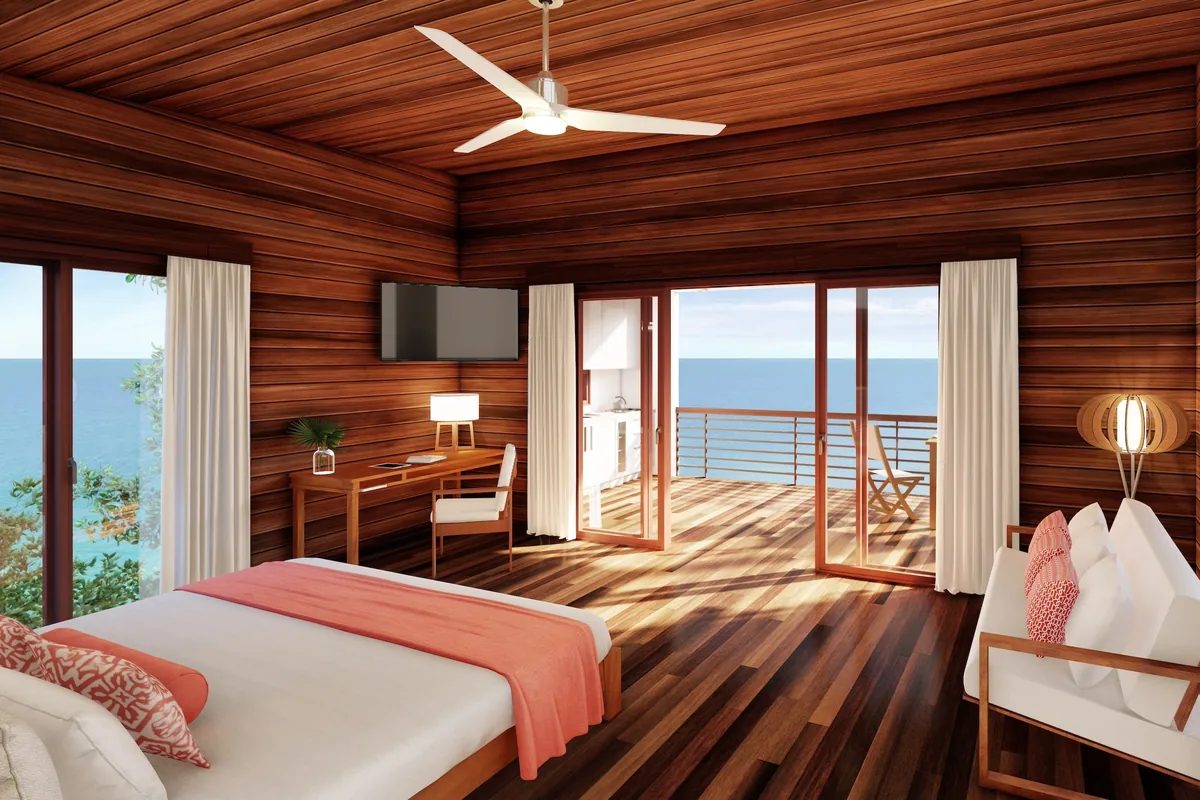
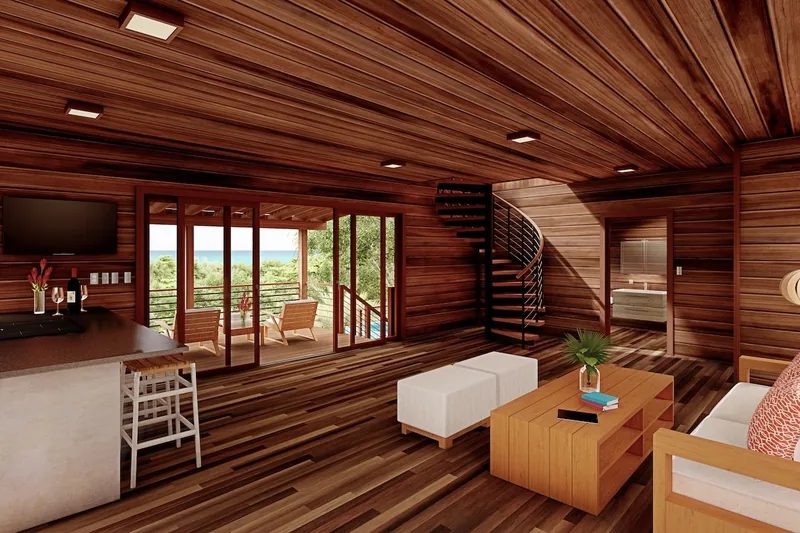
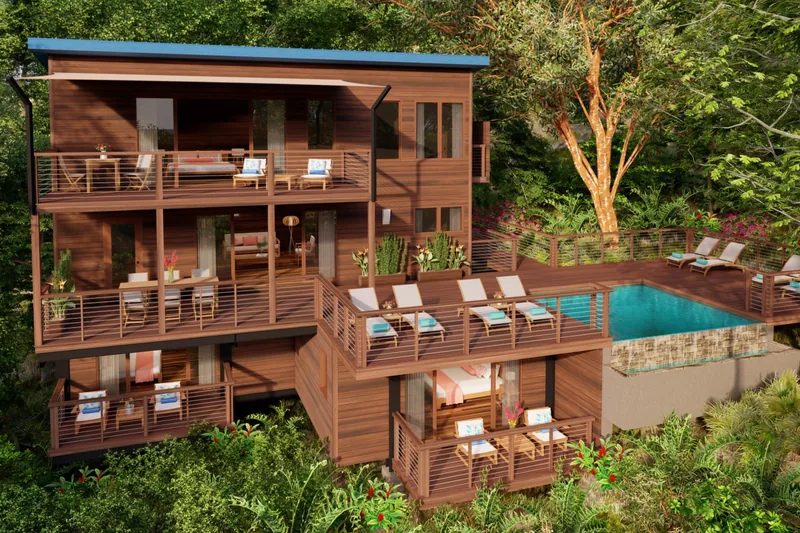
The Residences at Secret Bay has been a government-approved project under Dominica’s Citizenship by Investment Program since April 2019. The CBI Unit announced it then as 42 eco-luxury villas and villa estates across 33 acres, projected to create at least 120 jobs. Progress against that plan is documented: the resort reports 27 villas built as of the third quarter of 2025, up from six in 2019, with staff growing from 33 to 134 over the same period. Nine Waterfront Mapou villas were reported as starting construction before the end of 2025, with completion anticipated in autumn 2027. Those are off-plan. Anything you are shown of them is a rendering, not a photograph.
There are two ways in, and they are genuinely different assets:
- A share — US$220,000, carrying two weeks a year, rising to US$1,000,000 for ten weeks. This is a real ownership share in the LLCs that grant freehold title, within the Clifftop Zabuco and Ti-Fèy multi-villa estates. At the entry tier the two weeks are split: one week in a Zabuco villa, one in a Ti-Fèy villa. It is an interest in a villa-owning company rather than a villa, so ask for the owner-night entitlement and its terms in writing.
- Whole villas — published pricing has moved, so treat any number you read as a starting point. The developer’s citizenship page currently shows US$1.49 million to US$4.05 million per villa; an earlier release advertised new waterfront villas from US$1.39 million. Get a current written quote rather than relying on a figure in a press release. Separately, the developer reports a US$7.1 million sale of a four-villa clifftop estate of 9,786 square feet on more than an acre. It describes that as the most expensive vacation-home estate in the country to date, bought by someone outside the citizenship market entirely.
In two of those three cases you are buying an interest in a company, not a deed with your name on it. Ask for the LLC operating agreement and the rental management agreement early. The brochure will not tell you what the operating agreement tells you.
The carrying costs and fees nobody puts on the first page
If you are buying for the passport, the property price is not the cost. The Citizenship by Investment Unit publishes the rest, and it is substantial. There is a minimum qualifying investment in approved real estate, a government contribution scaled to family size, and per-person due diligence, processing, interview and naturalisation fees. A family of four adds well over a hundred thousand dollars to the ticket price before anyone talks about furniture. The current schedule is on CBI-approved real estate.
One point of structure worth knowing. Transaction costs here — stamp duty, judicial and assurance fees, the alien landholding fee and the legal scale — are set by Dominican law, not by this development, and are set out on the Dominica real-estate guide. How the landholding fee is treated inside a Cabinet-approved development is worth six figures on a US$1.5 million villa, if you are a cash buyer who does not want a passport. Settle it in writing with Dominican counsel before you sign. Dominica’s annual holding costs are light, and the municipal property tax does not reach the north-west coast where Secret Bay sits.
Then there is the phrase that causes the most trouble: no annual fees. The fractional program is marketed that way, and the developer’s own announcement carries the qualifier in a footnote. Coverage of annual fees, like the return-on-investment payments, is contingent upon market conditions and LLC or villa performance, with no guarantee of specific returns. Read that carefully. It does not say the costs do not exist. It says the villa’s earnings are expected to absorb them first. In a weak year, that assumption is precisely where your money goes. Before you commit, get the actual expense line: insurance and who arranges it, management fee, replacement reserve, and where each sits relative to your distribution.
One caveat matters more than any other for American buyers: US citizens are taxed on worldwide income regardless of where they live or what other passports they hold. Dominican citizenship changes nothing about your US filing and reporting obligations. Renouncing US citizenship is the only exit, and it carries its own exit-tax consequences and should never be undertaken casually.
Rental and usage: who controls the calendar
The mechanics are straightforward once stated plainly. The resort reserves several weeks in each villa for rental. After expenses, the resulting rental income is shared with owners on a per-villa basis, with payments made quarterly. Your owner usage is defined in weeks, not in open access. This is a hotel that you have a stake in, not a second home with a concierge attached.
The phrase to underline is per-villa basis. You are exposed to the performance of your specific villa, not to an averaged pool across the estate. Two owners at the same address can have quite different years. Comparing a smaller waterfront villa against a larger clifftop one is not just a comparison of price per square foot. They are two different rental businesses, with different nightly rates and different occupancy patterns.
On the record itself, the developer reports more than US$5.4 million in cumulative ROI distributions since late 2019. Average annual ROI is put in the 3% to 4% range, with select periods exceeding that when adjusted for operating days. The investor base grew from 147 in early 2022 to 223 by mid-2025. Those numbers are the developer’s own, published in sponsored features rather than audited accounts, and they should be treated accordingly. They are, at least, unusually specific for this sector, and six years of distributions is more of a record than most Caribbean citizenship real estate can show. On the face of it, 3% to 4% on a hotel-linked asset is a reasonable outcome for what it is, and it is not a yield to underwrite a purchase against. The developer’s own footnote says as much.
Three questions belong in writing before signing, and public sources do not answer them. Are your weeks fixed, floating or rotating? How are Christmas and February allocated among owners, and what is the actual owner-versus-operator split of net rental income? If the answers are not in the management agreement in writing, they are not answers.
The risks worth raising before you sign
The obvious property alternative on the island is the branded route. Cabrits Resort & Spa Kempinski opened in October 2019 as the first internationally branded hotel on Dominica, with 151 rooms, duplexes, suites and beach cabanas. Its citizenship shares were already sold out at opening. That is a larger-format, beachfront, internationally flagged bet. Secret Bay is a small independent operator. You are choosing between brand and scale on one side, and scarcity plus operator dependency on the other. The two carry different failure modes.
Two risks are worth putting on the table before you see a single villa, and two more before you sign.
- Exit is narrow, and it narrows further. The CBI Unit sets the holding period at three years from the date citizenship is granted, or five years if your onward buyer is themselves a citizenship applicant. The natural resale pool for a share is other citizenship applicants — the very pool the EU letters put a question mark over. A developer offering to help facilitate resale is offering a service, not a market.
- Hurricane exposure is real and documented. Hurricane Maria struck Dominica in September 2017; damages and losses were assessed at 226% of the country’s 2016 GDP, with more than 85% of houses damaged and more than a quarter completely destroyed. Secret Bay rebuilt and has gone from six villas in 2019 to 27, which is part of its record and worth asking about specifically. Ask about construction specification, insured values, deductibles and business-interruption cover.
- Single-operator concentration. The value of a share here is the value of this management team running this resort. Twenty-seven villas is thin. One bad season, one storm or one change of operator moves the entire thing, and there is no second brand standing by to take the keys.
Two entry points: a share, or a whole villa
There are two entry points. A share is US$220,000 and carries two weeks a year, rising to US$1,000,000 for ten weeks, described as a real ownership share in the LLCs granting freehold title within the two multi-villa estates. Whole villas are quoted in the millions, in ranges that have moved between releases, so get a current written quote. For scale at the top end, the developer reports a US$7.1 million sale of a four-villa clifftop estate of 9,786 square feet on more than an acre. If you are going the citizenship route, government fees sit on top of either.
Approved since April 2019, and the rules are the Unit’s
The Residences at Secret Bay has been a government-approved project since April 2019. The rules are set by the CBI Unit, not by the developer: a minimum US$200,000 investment in approved real estate, plus a government contribution scaled to family size, and per-person due diligence, processing, interview and naturalisation fees.
Owner usage is measured in weeks, not open access
No, and this is the most common misunderstanding about the place. Owner usage is measured in weeks, not open access. Fractional tiers run from two weeks to ten weeks a year, and the entry tier’s two weeks are split one week in a Zabuco villa and one week in a Ti-Fèy villa. For the lower-priced citizenship shares there is no published owner-usage entitlement at all, which is itself a reason to get it in writing rather than take it verbally. In every case the resort reserves weeks in each villa for paying guests, which is what generates your distribution. Ask specifically whether your weeks are fixed, floating or rotating, and how peak holiday weeks are allocated between owners.
Marketed as fee-free, with a footnote that matters
The fractional program is marketed as having no annual fees. The developer’s own announcement carries a footnote: coverage of annual fees, like the return payments, is contingent upon market conditions and LLC or villa performance, with no guarantee of specific returns. In plain terms, the costs exist and the villa’s rental earnings are expected to absorb them before anything reaches you. In a strong year that is invisible; in a weak one it is exactly where your money goes. Get the full expense schedule — insurance, management fee, replacement reserve — and see where each sits relative to your distribution before you commit. There is no published annual fee schedule for whole-villa owners, so ask for that separately.
The resort runs the programme, and what the distributions show
The resort operates the rental program; you do not let it independently. It reserves several weeks in each villa, and after expenses the rental income is shared with owners on a per-villa basis, paid quarterly. The developer reports more than US$5.4 million in cumulative distributions since late 2019, average annual ROI in the 3% to 4% range, and an investor base of 223 by mid-2025, up from 147 in early 2022. Those figures are the developer’s own, published in sponsored features rather than audited accounts, and they come with an explicit disclaimer that no specific return is guaranteed. Treat 3% to 4% as an observed history rather than a forecast, and never buy on the assumption that the income services debt.
A Dominica passport will not reduce an American’s tax bill
US citizens are taxed on their worldwide income regardless of where they live or how many other passports they hold, and acquiring Dominican citizenship changes nothing about your US filing and reporting obligations. Renouncing US citizenship is the only exit, and it triggers its own exit-tax regime and permanent consequences that need proper advice before anyone goes near it.

Dan Merriam
“We exclusively represent all of the new and existing whole-ownership villas at Secret Bay, and we run our office just off the Secret Bay lobby.”
Dan Merriam is a licensed real estate and investment migration professional who tracks pricing and availability across the region’s resort and branded developments. He compares the units for you, explains the ownership, rental program and citizenship rules, and builds a data room with detailed pricing and availability when you’re ready.
Explore Secret Bay with Dan.
Send a private inquiry to see current availability, ownership structure and pricing.
Request a Consultation