
Barbados Permanent Residency (2026): New Rules, Investor Route and Path to Citizenship
Barbados does not have a citizenship-by-investment programme. Here is the residency route instead: today’s Special Entry and Residence Permit, and new rules passed by Parliament on 4 November 2026, not yet in force, that add permanent residence through investment and a path from permanent residence to citizenship.
Barbados residency at a glance
In brief. Barbados does not have a citizenship-by-investment programme, and the government says the new law does not create one. Today it offers residence through the Special Entry and Residence Permit (SERP): the property route qualifies from US$300,000 of Barbadian real estate, the investor route from US$2,000,000 against a certified net worth above US$5,000,000, and there is no codified minimum stay. New rules passed by Parliament on 4 November 2026, not yet in force, add permanent residence through a $5,000,000 investment in an approved national development project, and make permanent residents eligible for registration as citizens after 360 days within four years, at the minister’s discretion. Barbados taxes residents, but levies no capital gains, wealth or inheritance tax, and taxes a non-domiciled resident on foreign income only as it is remitted. Property completion typically runs two to four months. It suits families who intend to use the island — not families who need a travel document.
Barbados is the most developed island in the Eastern Caribbean, and it offers what the citizenship programs to the north cannot: somewhere a family can actually live. There is no citizenship by investment here and never has been. Introducing the new citizenship law, the Minister responsible for immigration told the Senate on 4 November 2026 that “Barbados does not grant citizenship by investment” (Barbados Today, 4 November 2026).
The practice places Barbados in a different tier from the tax-neutral islands. Cayman, The Bahamas and Anguilla trade on a zero headline rate; Barbados trades on 31 double-taxation agreements in force (one of them the CARICOM multilateral), English common law, and direct long-haul service to the United Kingdom, the United States and Canada. Where the priority is quality of life and a liquid asset rather than mobility, that is usually the better trade — the case for Barbados over Dubai.
| Route | What it asks | Status (9 Nov 2026) | What it gives |
|---|---|---|---|
| Welcome Stamp | A twelve-month remote-work visa: US$2,000 for an individual or US$3,000 for a family, with declared income of US$50,000 or more | Operating; Cabinet approved renewal through 31 December 2026 | A trial year on the island. Time on it is reported to count toward permanent residence under the new law |
| SERP: property | Barbadian property worth at least US$300,000, funded from outside the island | Operating (administrative policy) | Renewable five-year terms, or indefinite at 60 or over. No right to work |
| SERP: investor | US$2,000,000 invested from outside Barbados, with certified net worth above US$5,000,000 | Operating (administrative policy) | Residence, with an entitlement to a work permit on application |
| New law: investor | $5,000,000 or more in a project the Minister designates as an approved national development project (s.10) | Passed 4 Nov 2026; not in force; no project designated | Permanent residence |
| New law: points | At least 180 days’ lawful residence in the past three years, plus points (s.9) | Passed 4 Nov 2026; not in force | Permanent residence |
| New law: five years | Five years’ lawful residence | Passed 4 Nov 2026; not in force | Permanent residence |
Who it suits
Families who intend to use the island rather than register an address there: parents who need schools and a hospital within reach, treaty-minded families with operating businesses, and North Americans basing part of the year here.
The counter-case is short. Anyone whose real requirement is a travel document should look at a Caribbean citizenship program instead. Anyone whose whole thesis is a zero headline rate should price Cayman, Bermuda and The Bahamas first. And Barbados is the most expensive island in the Eastern Caribbean; the carry on a west-coast villa is real and continuous. The practice says so before a search begins.
Residency today: the Special Entry and Residence Permit
SERP runs in four categories. Two are capital routes.
- Property route — from US$300,000. Barbadian property at a minimum value of US$300,000, funded from outside the island. Renewable five-year terms, or indefinite where the applicant is 60 or over. No entitlement to work.
- Investor route — from US$2,000,000. Investment sourced from outside Barbados, against a certified statement of net worth above US$5,000,000. Carries an automatic entitlement to a work permit on application.
- Skills and family categories. One for skills judged critical to the island’s development, one for a parent or grandparent of a Barbadian citizen aged 60 or over. Neither is a capital route.
- The Welcome Stamp — the trial year. A twelve-month remote-work visa from US$2,000, with no Barbados income tax on the holder. Terms in the FAQ.
Age bands, the full cost stack and the sequencing of purchase and application are worked through on a strategy call rather than published — for the reason below.
SERP is policy, not statute
SERP has no dedicated enabling legislation. It is granted under section 13(3) of the Immigration Act, Cap. 190, which permits the Minister to allow a person to remain on such terms as he thinks fit — so the categories, thresholds, fees and age bands are administrative policy under a discretionary power, revisable without a bill passing. That is a reason to verify rather than avoid. The practice confirms the current schedule with the Immigration Department, in writing, before a family fixes a budget.
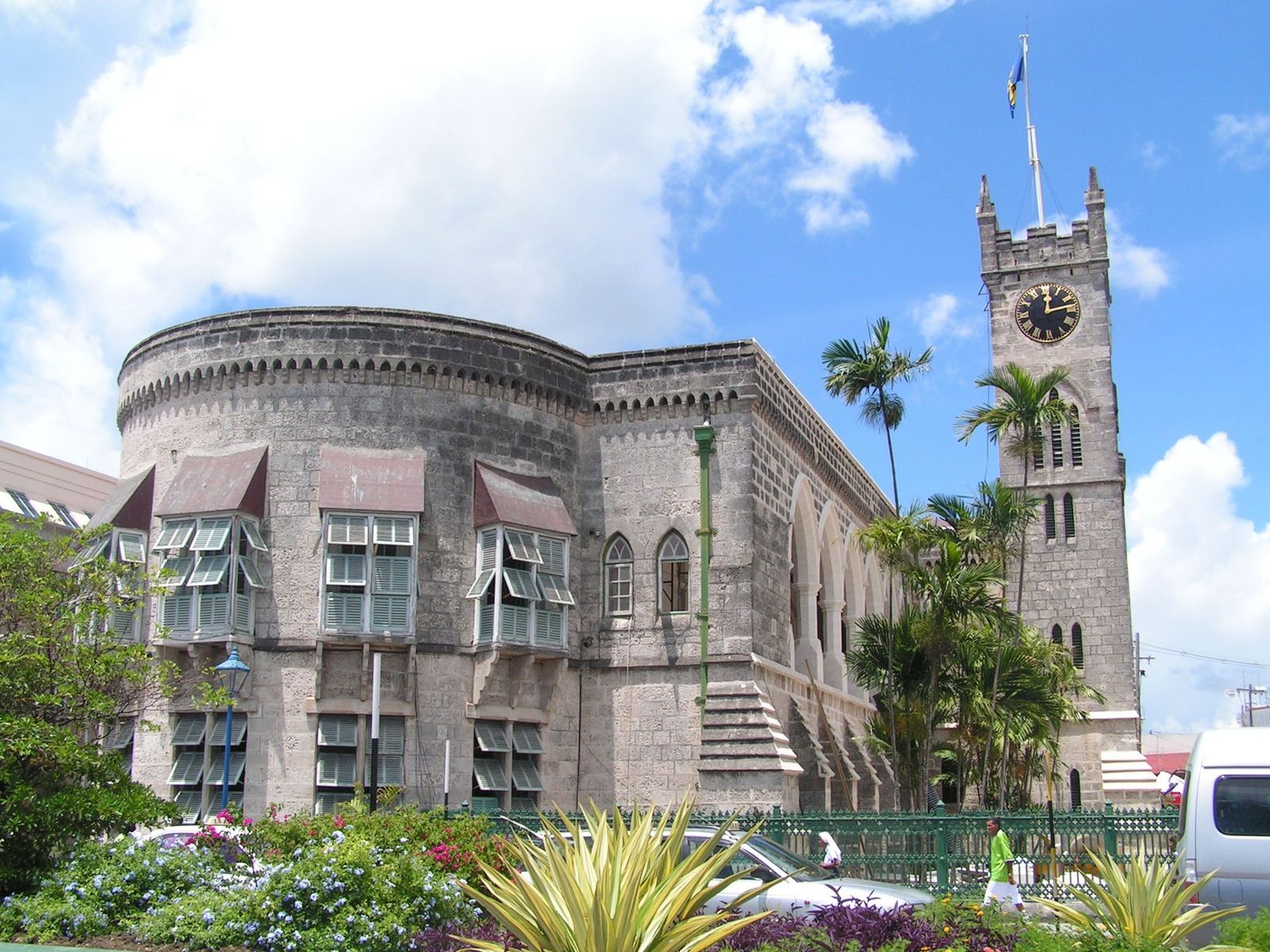
The new law: permanent residence, passed but not yet in force
The Immigration Bill, 2026 and the Barbados Citizenship Bill, 2026 passed the House of Assembly on 27 October 2026 and the Senate on 4 November 2026 (Parliament of Barbados, Immigration Bill; Citizenship Bill). Neither is in force: each starts on a date fixed by proclamation, and the regulations that set fees, forms and approved projects have not been published. Last checked 9 November 2026.
- Who qualifies for permanent residence. The Immigration Bill replaces “immigrant status” with permanent residence. Routes include five years’ lawful residence, the points route below, and the investor route. Until the bill is in force, SERP is the route that actually operates.
- Investor route. Section 10 lets a non-citizen be registered as a permanent resident after a “qualifying investment” of $5,000,000 or more in a project the Minister designates by order as an approved national development project. The bill writes “$” without naming the currency; in Barbados dollars that is about US$2.5 million at the fixed rate of BBD 2 to USD 1. Residence can be withdrawn if the investment is withdrawn before the “approved period” or the project is not completed.
- The approved-project question. No project has been designated and no list is published. The Minister must be satisfied that a project serves a public purpose and contributes significantly to Barbados’s development. Nothing in the bill says that buying a home qualifies, so this page does not assume it does.
- Points route. Someone short of five years’ residence can qualify with at least 180 days’ lawful residence in the past three years plus points, each point counting as six months (section 9). Investment in an approved national development project earns 2 points from $1,000,000, rising to 8 points between $4,000,000 and $5,000,000 (Third Schedule).
- Welcome Stamp versus permanent residence. The Welcome Stamp is a twelve-month visa, not permanent residence. Time spent on it is reported to count as lawful residence toward permanent residence (IMI Daily, 30 October 2026).
- The 360-day path to citizenship. Under section 3(5) of the Citizenship Bill, a permanent resident who is not a CARICOM national becomes eligible for registration as a citizen after 360 days’ residence within the 1,460 days before the application; CARICOM nationals after 270 days within 1,095. Registration is at the Minister’s discretion and can be refused on grounds that include national security and public policy (section 4).
What is still unknown
As of 9 November 2026: the start date, the regulations and fees, how long the “approved period” is, which projects will be designated, and how today’s SERP holders move across. The practice rechecks the Parliament record and the Government Information Service each month, and confirms the position with the Immigration Department in writing before a family commits money.
From permanent residence to citizenship
No purchase in Barbados leads straight to citizenship. Under the law in force today, naturalisation is separate and far longer: residence for an aggregate of at least five of the last seven years plus the twelve months immediately preceding the application, then police clearances, a medical and an oath of allegiance. Once the new Citizenship Act is in force, permanent residents become eligible for registration as citizens after 360 days within 1,460, at the Minister’s discretion; permanent residence comes first, and on the investor route that means the $5,000,000 approved-project investment above. A Caribbean citizenship program clears in four to six months and asks nothing of the calendar; families who need mobility pair a Barbados base with one.
- Permanent residence first.Through five years’ residence, the points route or the investor route, once the Immigration Act is in force.
- Residence as a permanent resident.360 days within the 1,460 days before the application; 270 within 1,095 for CARICOM nationals (Citizenship Bill, section 3).
- Registration, at the Minister’s discretion.Registration can be refused on grounds that include national security and public policy (section 4).
How a move to Barbados usually runs
- Test the island first, if you can.Some families start with a Welcome Stamp year, living in Barbados before they buy. It is a visa, not residence, and its terms are in the FAQ.
- Confirm the current permit schedule in writing.Because SERP is policy rather than statute, the categories, fees and age bands are confirmed with the Immigration Department before a budget is fixed.
- Choose the property against three tests.The permit threshold, the family and the eventual resale. Funds come from outside the island, and inbound funds are registered for exchange control.
- Complete the purchase.English-style conveyancing with no alien landholding licence; completion typically runs two to four months.
- Submit the permit file.The SERP application goes to the Immigration Department once the qualifying property or investment is in place.
- Plan tax residence separately.The permit is immigration status. Tax residence turns on days and domicile, and how income is ordered in the first year is planned before arrival.
- Watch the new law.When the Immigration Act and Citizenship Act come into force, permanent residence and the 360-day registration path become available on their own terms. The practice tracks the regulations monthly.
Presence and tax residence
There is no codified minimum physical presence to hold or renew the permit — the lightest touch of any residence route the practice covers, against 30 days a year for the Cayman Islands Residency Certificate and 90 days a year for five years under Bermuda’s Economic Investment Residential Certificate. A permit is immigration status, not tax residency: Barbados treats an individual as resident on presence of more than 182 days in a calendar year, and separately as ordinarily resident on the accommodation-and-notice test set out in the FAQ below. The permit lets a family stay away; it does not by itself make anyone tax-resident anywhere, and a certificate with no days and no home behind it is an audit flag rather than a plan — see tax residency.
How Barbados taxes a resident
Barbados is not a zero-tax island. It levies no capital gains tax, no wealth tax and no inheritance or estate tax. Personal income tax was cut for Income Year 2026 to 0% on the first BBD 25,000, 11.5% from BBD 25,001 to BBD 75,000 and 27.5% above BBD 75,000. The currency has been pegged to the US dollar at BBD 2 to USD 1 since 5 July 1975.
The draw is the remittance basis. A resident who is not domiciled in Barbados is taxed on Barbados-source income, and on foreign income only as it is remitted or a benefit is obtained on the island; a resident who is also domiciled is taxed on worldwide income. The distinction runs on domicile, not a clock: a domicile of origin is retained until a domicile of choice is acquired, which takes residence plus an intention to remain indefinitely — the same test that decides non-domiciled tax status wherever the concept survives. How income is ordered in year one decides whether the treatment is worth having; it is planned before arrival, not after.
One caveat governs all of the above. US citizens are taxed by the United States on worldwide income regardless of residence or a second citizenship; the rates here describe Barbados’ own system, not an American family’s global position. Barbados does hold a comprehensive US income tax treaty — one of only three Caribbean countries that does, with Jamaica and Trinidad & Tobago, and none of the five citizenship programs has one. A treaty allocates and relieves cross-border income; it does not switch off citizenship-based taxation.
Where residents live
Where a family lives on Barbados shapes the permit file, the running cost and the resale. Three coasts behave very differently.
The west coast. One stretch of calm, Caribbean-facing shore, roughly Paynes Bay through Holetown to Speightstown, carries most of the island’s prime market. Sandy Lane, Royal Westmoreland and Apes Hill anchor it; villas are tightly held and the resale market has real liquidity by Caribbean standards.
The south coast. The south coast around St. Lawrence Gap trades at a meaningful discount to the west and rents well year-round.
The east coast. The wild Atlantic side: spectacular, largely undeveloped, and for most buyers better visited than owned. The Crane sits on the south-east Atlantic shore.

For families moving full-time, the deciding factors are usually the same ones that bring them to Barbados in the first place: schools, private healthcare, and direct flights to the United Kingdom, the United States and Canada.
Property that fits the permit
On Barbados the property does the qualifying work, so one asset has to satisfy three tests at once: the permit threshold, the family, and the eventual resale. The market is unusually open by regional standards — no restriction on foreign ownership, no alien landholding licence, English-style conveyancing, completion typically two to four months, and most transaction taxes falling on the seller rather than the buyer.
The prime market sits on one stretch of Caribbean-facing shore from Paynes Bay through Holetown to Speightstown, where Sandy Lane, Royal Westmoreland and Apes Hill between them account for most of it.
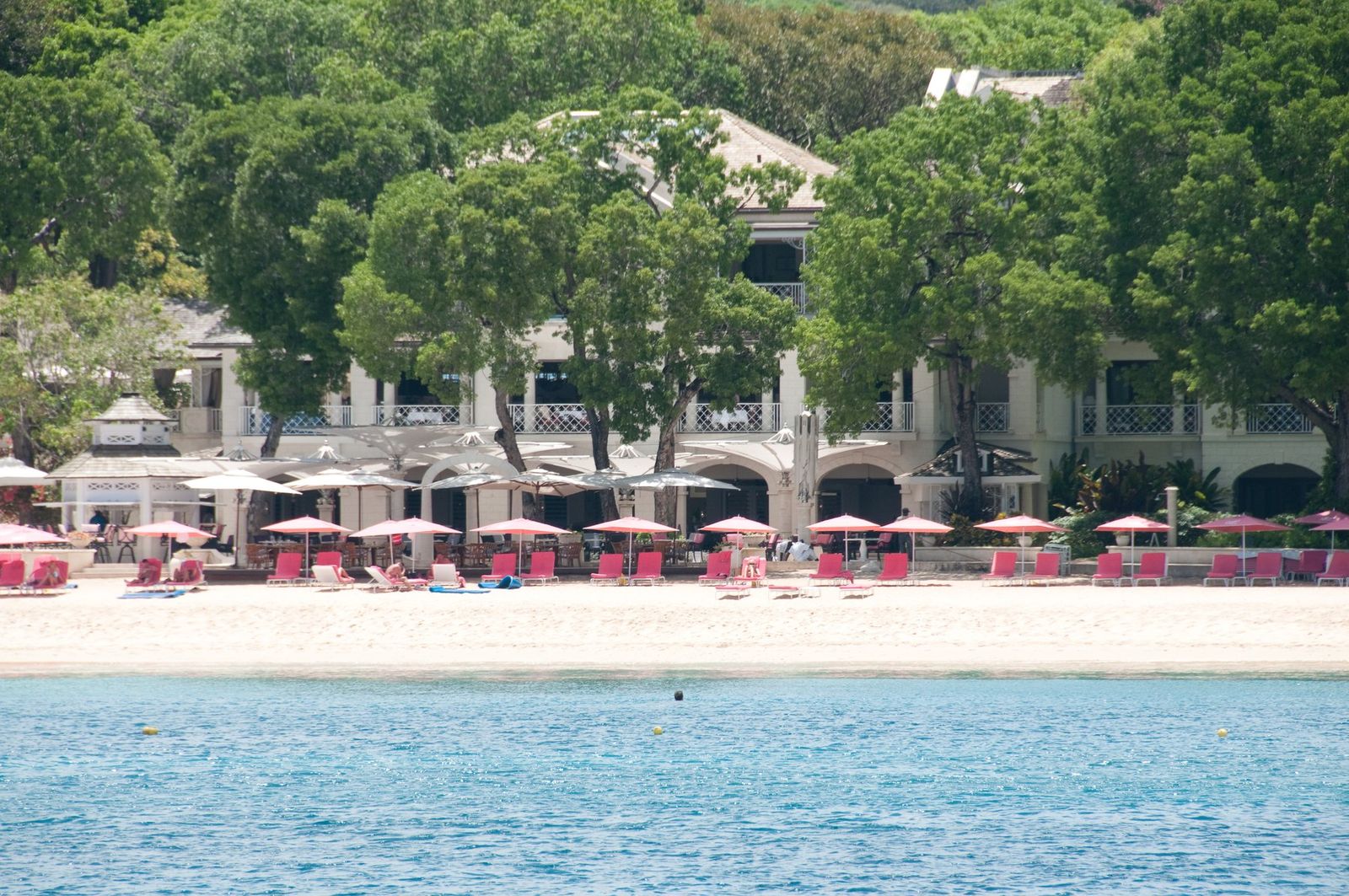
- The Crane Private Residences, one-bedroom 5435 — US$589,000. The lowest asking price in the current selection; a right-to-use interest rather than a freehold (see below).
- Royal Westmoreland, two-bedroom apartment — US$650,000. The accessible way in, comfortably above the SERP property threshold.
- The Crane Private Residences, two-bedroom — US$899,000. Atlantic coast, and not a freehold: the interest is a right to use, held in trust by a licensed Isle of Man trustee to the year 3000. Respectable, and not a deed. Confirm with the Immigration Department that the interest meets the property route before relying on it.
- Port St Charles lagoon townhouse — US$1,300,000. Berth-side living in a working marina community.
- The Crane, outer penthouse 5464 — US$2,199,000. Three bedrooms, 230 m².
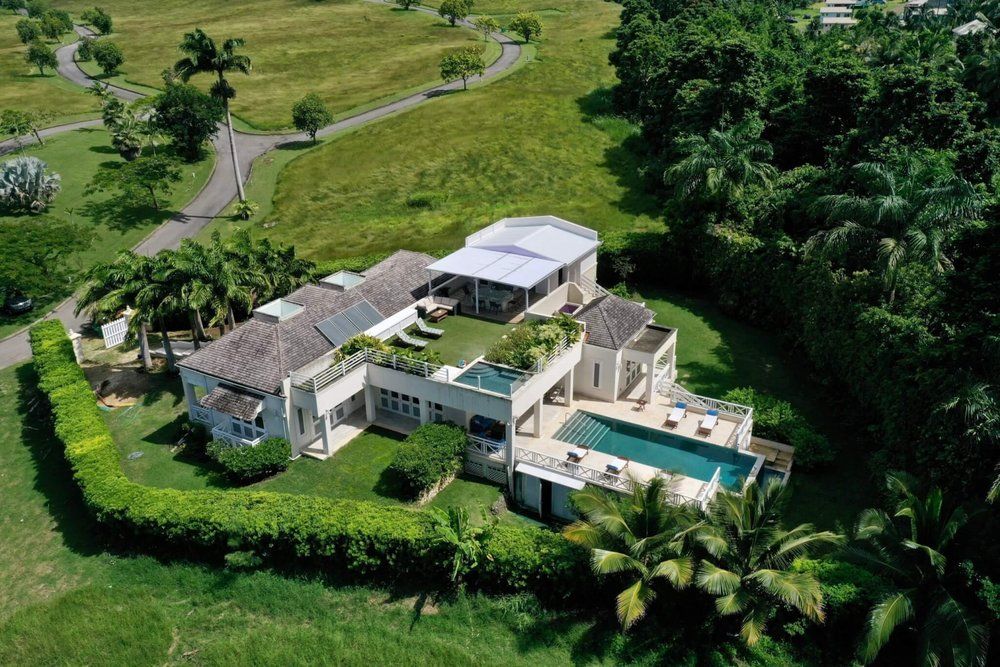
- Royal Westmoreland, six-bedroom fairway villa — US$5,249,995.
Asking prices from the current Barbados listings on this site, 9 November 2026. Every listing is on Barbados real estate for sale.
The annual carry
Land tax is the published part, charged on improved value in bands rising to 1.0% above BBD 850,000. Run the six-bedroom fairway villa above through those bands at its asking price and the arithmetic lands near BBD 99,000 — about US$49,000 a year — before a single service charge. The unpublished part is the estate service charge and, on the golf estates, club membership sold separately from the deed. The practice quotes no rate for either — both are set per estate and both move — and asks the vendor for current figures and three years of history in writing before contract. A service charge that has climbed steadily is a materially different asset from one that has held flat.
Holding structures, the customary cost split and exchange-control registration of inbound funds are set out in the Barbados real-estate guide; current availability sits on listings, with the west-coast estates handled by appointment.
Barbados compared with Cayman, Bermuda and The Bahamas
Barbados is the only one of the four that taxes residents on income, and the only one with no codified presence requirement for its permit. It is also the lowest entry point by some distance. The trade is a taxed island with treaties and full-time infrastructure, against zero-tax islands with higher thresholds and day counts.
| Investment route and minimum | Presence | Personal income tax | |
|---|---|---|---|
| Barbados | SERP property route: Barbadian property from US$300,000 | No codified minimum stay | Yes: 0% to 27.5% (Income Year 2026), with a remittance basis for residents not domiciled there |
| Cayman Islands | 25-year Residency Certificate: CI$1,000,000 (about US$1.2 million), at least CI$500,000 in developed real estate | 30 days a year | None on individuals |
| Bermuda | Economic Investment Residential Certificate: BD$2,500,000 | 90 days a year for five years | None on individuals |
| The Bahamas | Economic permanent residence: at least BSD 1,000,000 (about US$1,000,000) | See The Bahamas residency | None |
Moving from Canada or the United States
From Canada. The purchase, who pays which closing costs, closing from Toronto and the currency are set out on buying property in Barbados from Canada. Leaving Canada has its own tax consequences, and Barbados and Canadian tax rules interact in ways that are complex; speak to a Canadian cross-border tax adviser before you move. Dan’s notes on the Canada–Barbados tax treaty and Caribbean bases for Canadians cover the background.
From the United States. The United States taxes its citizens on worldwide income wherever they live, so a Barbados permit changes the local position and nothing federal. Barbados does hold a comprehensive US income tax treaty; what that does and does not change is covered on tax residency.
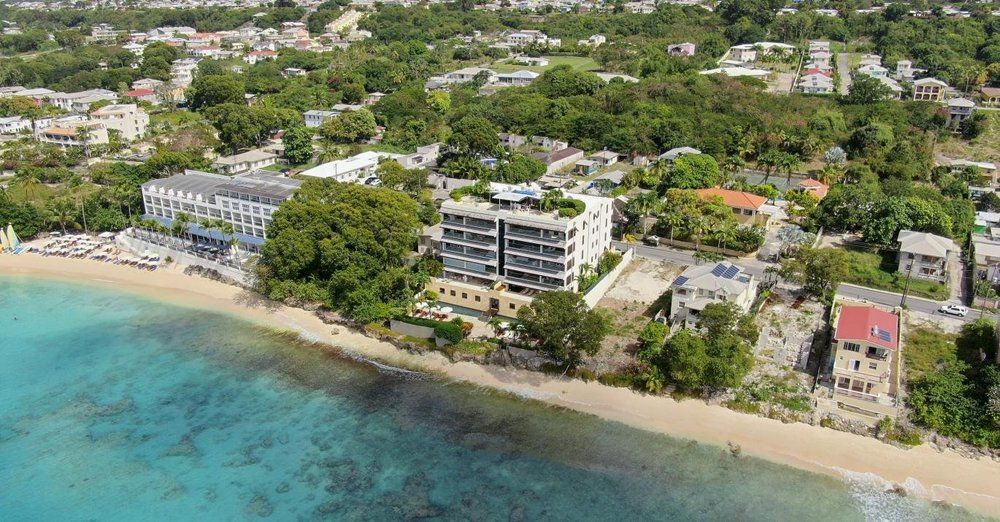
If you are American: the United States taxes its citizens on worldwide income wherever they live, so none of the above changes a federal filing. What does is covered on tax residency.
Frequently asked questions
Does Barbados offer citizenship by investment?
No. Barbados does not have a citizenship-by-investment programme, and the Minister told the Senate on 4 November 2026 that Barbados does not grant citizenship by investment. Today it offers the Special Entry and Residence Permit. New rules passed by Parliament but not yet in force add permanent residence through a $5,000,000 investment in an approved national development project, and make permanent residents eligible for registration as citizens after 360 days within 1,460, at the Minister’s discretion.
Does buying property in Barbados qualify for permanent residency under the new law?
Not on the published text. The investor route asks for $5,000,000 or more in a project the Minister designates as an approved national development project, and no project has been designated yet. The bill does not say that buying a home qualifies. Under today’s Special Entry and Residence Permit, Barbadian property from US$300,000 does qualify for residence.
When do the new Barbados residency rules start?
No date is set. The Immigration Bill and the Citizenship Bill passed the Senate on 4 November 2026, and each starts on a date fixed by proclamation. Fees, forms and the approved projects come in regulations that have not been published. Last checked 9 November 2026.
Does the Welcome Stamp lead to permanent residency?
Not by itself. The Welcome Stamp is a twelve-month visa. Time spent on it is reported to count as lawful residence toward permanent residence under the new Immigration Bill, once that is in force.
What is the minimum to qualify for Barbados residence?
The property route asks Barbadian property valued at a minimum of US$300,000, funded from outside the island. The investor route asks US$2,000,000 sourced from outside Barbados against a certified net worth above US$5,000,000. Because the permit is policy rather than statute, the current fee schedule is confirmed with the Immigration Department before a budget is fixed.
How many days a year must I spend in Barbados?
None are codified to hold or renew the permit. Tax residency is a separate test: presence of more than 182 days in a calendar year, or ordinary residence, where permanent accommodation is kept available and notice is given of an intention to reside for two consecutive income years.
How is a new resident taxed in Barbados?
No capital gains, wealth or inheritance tax. Income Year 2026 personal rates run at 0% on the first BBD 25,000, 11.5% to BBD 75,000 and 27.5% above. A resident not domiciled in Barbados is taxed on Barbados-source income and on foreign income only as remitted. That is Barbados’ own system: US citizens are taxed on worldwide income wherever they live.
Does Barbados have a tax treaty with the United States?
Yes — one of only three Caribbean countries with a comprehensive US income tax treaty, alongside Jamaica and Trinidad & Tobago, and none of the five Caribbean citizenship programs has one. A treaty allocates and relieves cross-border income; it does not switch off US taxation of a citizen’s worldwide income.
Why is so much Barbados property held through an offshore company?
Because transferring shares in a foreign company is not a transfer of Barbadian land, a share sale can avoid the property transfer tax and stamp duty a direct conveyance attracts. The buyer acquires a company with its history, filings and running cost, and owning a foreign company carries reporting consequences at home, particularly for Americans and Canadians.
Is the Welcome Stamp a sensible first step?
Often. It is a twelve-month remote-work visa at US$2,000 for an individual or US$3,000 for a family, requiring declared income of US$50,000 or more and long-term health insurance, with approvals typically within seven business days and no Barbados income tax on the holder. Cabinet approved renewal through 31 December 2026, so its status is checked before a school year is planned around it.
Is Barbados permanent residency the same as citizenship?
No. Permanent residence is permission to live in Barbados indefinitely; it is not citizenship and not a travel document. Under the new Citizenship Bill, once in force, a permanent resident who is not a CARICOM national is eligible for registration as a citizen after 360 days’ residence within the 1,460 days before applying, at the Minister’s discretion.
What is the difference between SERP and the new permanent residence?
The Special Entry and Residence Permit is the route that operates today: an administrative permit granted under section 13(3) of the Immigration Act, with a property route from US$300,000. Permanent residence under the Immigration Bill, 2026 is a statutory status that starts only when the Act is brought into force. How today’s SERP holders move across has not been published.
Describes Barbados’ own tax system. Americans are taxed on worldwide income wherever they live.
Sources: Barbados Revenue Authority, double taxation agreements · Barbados Revenue Authority, Policy Note OGC 001/2026, reduction of personal income tax rates · Sources checked 1 September 2026
Tax residence, personal tax and corporate tax in Barbados
Sources: PwC Worldwide Tax Summaries, Barbados (reviewed 9 October 2026); Barbados Revenue Authority, Policy Note OGC 001/2026. This describes the rules of Barbados. US citizens are taxed on worldwide income wherever they live; take advice from a tax adviser in your home country before you move.

Explore Barbados with Dan.
Apply for a private call to test the permit, the purchase and the tax position against your family’s goals.
Apply Now