
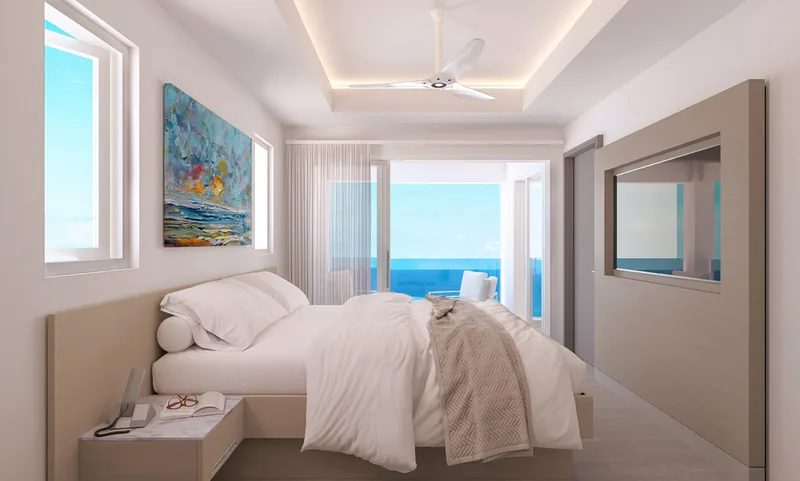
The Crane Resort & Residences
The clifftop resort and its private residences above Crane Beach on Barbados' Atlantic coast.
- IslandBarbados (St Philip, Atlantic coast)
- Open since1887
- Estate~40 acres, clifftop
- BeachCrane Beach — surf, undertow, lifeguarded at peak
- Airport~15 minutes
- RouteNo CBI — residency
- FromUS$589,000 whole
Residences available.
Every unit currently on the book here, with what is off-market available on request.

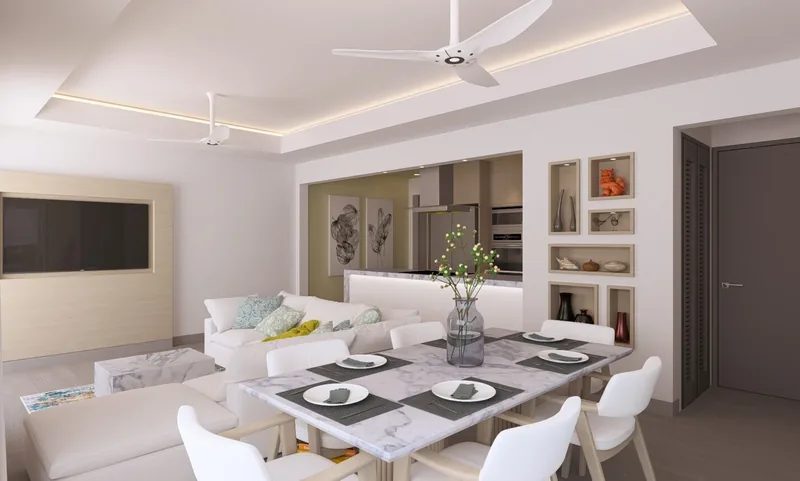
Crane Private Residences Phase 4 — Two-Bedroom, Barbados

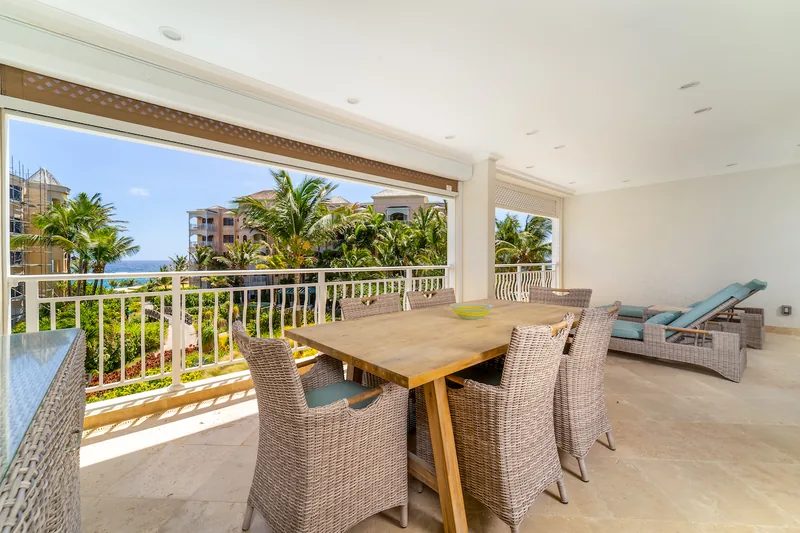
Crane Private Residence 5122, Barbados

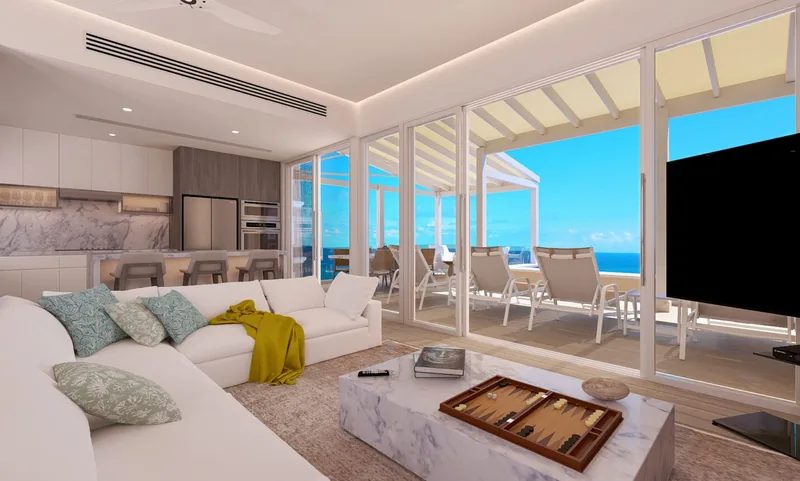
Outer Penthouse 5464, The Crane Private Residences, Barbados

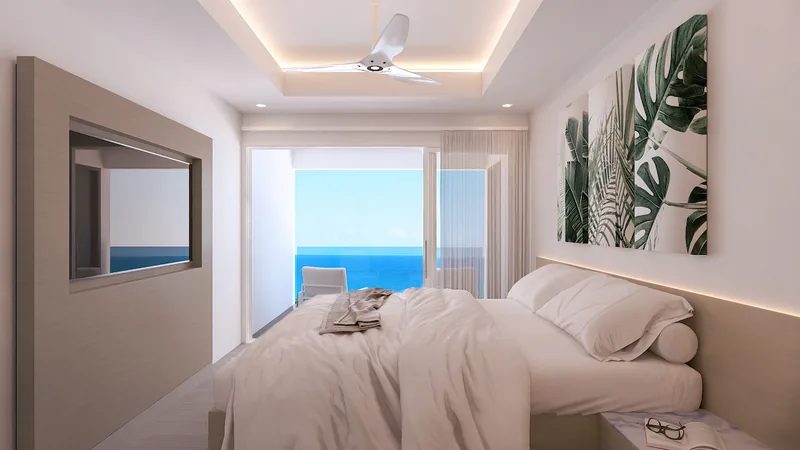
One-Bedroom 5435, The Crane Private Residences, Barbados
Get the current price list for The Crane Resort & Residences
Dan sends what is available now, including residences that are not advertised, with prices, floor plans and terms. He replies personally within one business day.
- Tell Dan what you have in mindBudget, timing and the kind of home. Two minutes, and it stays private.
- Get pricing and availabilityCurrent prices, what is genuinely available and what is coming, within one business day.
- Talk it throughA 30-minute call with Dan when you are ready. No fee, no obligation.
About The Crane Resort & Residences
The Crane sits on a coral cliff above Crane Beach in St Philip, on the south-east coast of Barbados. It takes its name not from the bird but from the mechanical crane that hauled cargo up from ships when this was a working port in the mid-18th century. A mansion on the headland became a hotel in 1887, which is the basis for the claim — made by the resort and by Barbados' own tourism authority — that it is the oldest continuously operating hotel in the Caribbean. I would treat that as a well-supported claim rather than a settled fact, but the 1887 date itself is not in dispute.
The modern estate is the work of Paul Doyle, a Canadian who bought an 18-room property in 1988 and expanded it across roughly 40 acres. What exists now is closer to a small village than a hotel: a 1.5-acre cascading cliff pool complex facing the Atlantic, a separate adults-only pool from the 1970s framed by Doric columns on the cliff edge, eight or so dining rooms including Zen, Azure and Bar 1887, a spa in the original hotel building, and a cobbled market square with a genuine grocery, so an owner can restock without leaving the estate. The airport is about 15 minutes away; Bridgetown is around 18km.
Read Dan’s full review of The Crane Resort & Residences
The trade is geographic. The west coast — the Platinum Coast — faces the Caribbean Sea: calm, shallow, and where the island's densest concentration of luxury villas sits. The Crane faces the Atlantic. Crane Beach is a crescent of pink-tinted sand beneath the cliffs, reached by a glass-walled cliff elevator, and it has been on best-beach lists for decades. But it is Atlantic water: constant trade-wind breeze, rolling surf, superb bodysurfing, and a real undertow that rewards confident swimmers and punishes casual ones. Lifeguards patrol at peak hours. You are buying drama, breeze, lower density and airport proximity in exchange for a beach you respect rather than wade into.
The Crane Private Residences is a five-acre, five-building residential development set inside the 40-acre Crane Resort at Crane Beach, St Philip, on the south-east coast of Barbados. The resort itself dates to 1887 and runs to 366 rooms, so this is not a bare site with a rendering attached — the restaurants, spa, pools, security and staff you are buying into already exist and already work. The residences sit on their own site, separated from the hotel and from the resort’s fractional-ownership buildings. Phase 3's 46 residences were announced as sold out in May 2025, and Phase 4, billed as the final phase, has been selling off-plan since 2024.
Here is the thing buyers get wrong, and they get it wrong routinely. This is not freehold Barbados real estate. What you acquire is a right to use, held in trust by First National Trustee Company in the Isle of Man, running to the year 3000. One agency listing for a residence here records the tenure simply as "Freehold: Yes". That is not what it is, and if the agent showing you round says the same thing, you have learned something useful about the agent. Worth noting too that the developer’s own materials are not consistent: its FAQ page calls the interest a "Right to Use held in trust", while its blog calls it "a Leasehold Agreement held in trust". Those are not the same words, and words are the entire asset here. The trust is not a defect — it carries genuine advantages, set out below — but it is a different thing from a titled Barbados condominium, and it deserves to be priced, financed and exited as one.
What you actually own at The Crane Private Residences
Ownership is a right to use, held in trust by First National Trustee Company (FNTC) in the Isle of Man, running to the year 3000. Because there is no Barbados conveyance, the developer’s position is that it is not necessary to retain an attorney-at-law, that closing can happen the same day, and that there are no closing costs, sales taxes or legal fees on the way in. The developer also says the trustee confirms there is no debt, prior ownership or lien on the property, and that the interest can be willed, transferred or sold at any time.
Every one of those statements is the seller’s characterisation of its own product. Some of them may well be right. None of them is a substitute for reading the deed.
What you do not receive is a registered Barbados title in your own name. You hold a beneficial interest in a trust that holds the property. In practice that is close to permanent — a term running to the year 3000 is not a lease anyone alive will watch expire — but the document, not the brochure, is what governs. Before you sign, put the trust deed itself in front of a lawyer of your own choosing, whatever the developer says about lawyers not being necessary, with plain answers on:
- Who can amend the trust instrument, and whether owners get any say
- What happens if the trustee is replaced, acquired or wound up
- What rights you actually hold against the developer if service standards slip
- How the fees are set, whether they are capped, and how an owner challenges them
- What consent, if any, you need in order to sell, and to whom you may sell
- Whether the instrument is a right-to-use or a leasehold, since the developer’s own pages use both terms
The carrying costs — and the number nobody publishes
You pay two annual charges, the Community Fee and the Residence Fee, referred to together as "The Fees". The developer itemises what the Community Fee covers. Building insurance, property taxes, and maintenance of the external building and common areas including the residence lifts and entrance gates. Landscaping, pool service, common-area utilities and refuse collection. Encoded alarm systems with video communication to the lobby, hard-wired smoke detection, and CCTV in the underground parking garage. Internet, long-distance landline calls and cable television. And a 10% management fee. On top of that sits a proportional share of resort services. Armed gated entry and security around the clock. The fitness facility, kids’ club and resort pools. Beach lift and beach access with chairs, umbrellas and service staff. Two floodlit tennis courts, resort-wide WiFi, front desk and concierge.
That is a genuinely broad bundle, and for a lock-and-leave second home it removes almost all of the work. Two things are missing from it. First, the developer publishes no separate explanation of what the Residence Fee buys that the Community Fee does not — you are asked to pay two charges and told what one of them covers. Second, and more importantly, there is no number. No published fee figure for any unit type appears on the developer’s own site or anywhere else. So ask for it in writing, per residence, and ask for more than this year’s:
- The current annual charge for your exact unit, split into its Community and Residence components, with a line-by-line statement of what the Residence Fee pays for
- Five years of history, so you can read the trend rather than the level
- The insurance line specifically, and the deductible — Caribbean property cover has repriced hard
- Whether an uninsured or under-insured loss can be levied back onto owners, and on what basis
- How the 10% management fee is calculated, since a percentage of the budget rises every time the budget does
One small practical point that catches people late: pets are not permitted, in the residences or anywhere in the resort.
Renting it out, and how to read a guaranteed return
When you are not there, the residence can go into a managed rental rotation run by the resort, which handles the marketing, bookings and guests. For most owners of a Caribbean second home that is the right answer — self-managing a rental from four thousand miles away is a second job you did not apply for.
The economics are the part to slow down on. The developer does not publish the rental management fee, and no rate could be verified against any primary source, so treat whatever an agent quotes you as unconfirmed until you see it in the management agreement itself. Then work out what sits underneath it:
- Is the fee taken on gross booking revenue, or on net after commissions?
- Who absorbs tour-operator and online-travel-agency commissions, card fees, housekeeping, linen and consumables?
- Is there a furniture and equipment replacement reserve, and who sets its level?
- How many owner-use nights do you get, in which seasons, and how far ahead must you claim them?
- Is your unit pooled with others, or rented and accounted for on its own performance?
At least one agency marketing Phase 4 advertises a guaranteed annual return for the first four years after completion, without publishing the rate. A guarantee is a credit question, not a yield question. Ask who the counterparty is, what it is secured on, what your remedy is if a payment is missed, and what year five looks like once it lapses. Guarantees are rarely free — they are usually priced into the purchase.
How it compares to buying freehold in Barbados
The comparison is not this against nothing. It is this against a titled condominium elsewhere on the island, most likely on the calmer west coast.
The trust structure wins on friction. On a conventional Barbados sale the transaction taxes fall on the seller, with statutory-scale legal fees on top; the current rates are on the Barbados real-estate guide. Non-residents also bring their purchase funds in through the Central Bank of Barbados, and repatriating sale proceeds later runs through that same system — a formality people skip at the front end and then discover years later at exit. The developer’s position is that a trust transfer here sidesteps both the conveyance taxes and the currency registration. On a resale in the high six figures, the tax saving is real money and real time. But sidestepping the registration cuts both ways, and the obvious follow-up deserves a written answer: if your money never went in through the Central Bank, exactly how does the sale proceed come out?
Freehold wins on liquidity and control. A registered title can be mortgaged, sold to anyone, let through any agent you like, and valued against comparable sales. A trust right-to-use interest sells into a narrower pool, and your resale competes head-on with the developer’s own new phases. You can see it in the listings: on one portal a 1,882 sq ft two-bedroom was offered at US$825,000 while a newer 1,265 sq ft two-bedroom sat at US$899,000 — bigger, cheaper, still advertised. On the same portal a 2,028 sq ft three-bedroom was asking US$895,000, less than that 1,265 sq ft two-bedroom. Asking prices also diverge between agents for the same stated floor plan: another agency advertised Phase 4 two-bedrooms of that 1,265 sq ft size from US$775,000.
And the sea is different. Crane Beach is an exposed beach break with, on the surf forecasters’ assessment, very consistent surf. If your mental image of a Barbados second home involves stepping into flat calm water before breakfast, spend a morning on that sand before you commit to it.
What to raise before you sign
- Residency is not automatic. Owning property in Barbados confers no right of residence by itself. Citizens of the US, UK and Canada may be granted up to six months as visitors; beyond that you need a permit. Barbados runs a Special Entry and Residence Permit, and Category 2 is aimed at property owners: it asks for Barbados property worth at least US$300,000 and costs US$5,000 per renewable five-year term, becoming indefinite from age 60. Category 1 asks for a US$2 million investment and net worth above US$5 million. Category 2 does not carry the right to work in Barbados. And whether a trust right-to-use interest satisfies the "own property in Barbados" test is the open question — no published ruling either way could be found, so get it confirmed by Immigration in writing before you buy for that reason.
- There is no citizenship here. Barbados does not operate a citizenship-by-investment program. Residency only. If anyone frames a Crane residence as a route to a second passport, end the meeting.
- US persons. US citizens and green-card holders are taxed on worldwide income regardless of where they live, and renouncing citizenship is the only exit from that. Rental income and any gain on sale are reportable at home, and holding a beneficial interest in a non-US trust can raise its own US reporting obligations. Have that reviewed before you sign, not at the next filing deadline.
- Weather. Barbados is not exempt. The World Bank puts the annual average loss to Barbados from hurricanes alone at around US$48 million, close to 1% of GDP. Hurricane Beryl did not make landfall on the island — it passed about 150 km off the south coast on 1 July 2024 — and even so, on the World Bank’s account 73% of the country’s hotels, apartments and guest houses suffered some level of damage. Read the insurance schedule properly, and read the deductible.
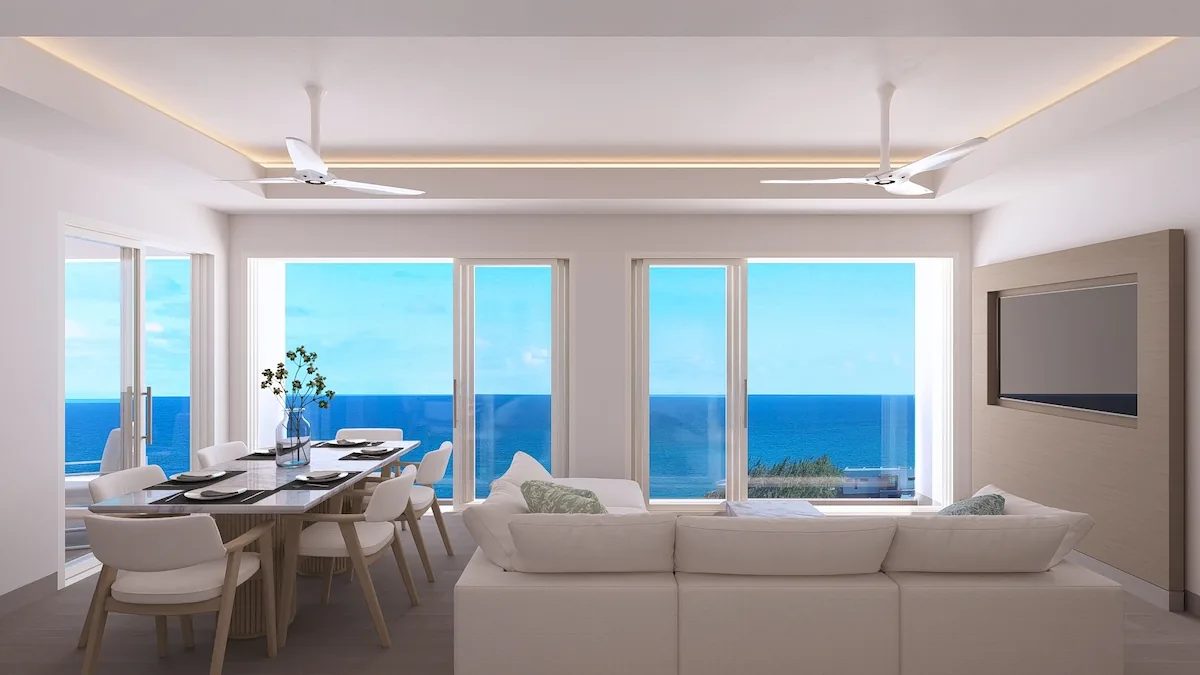
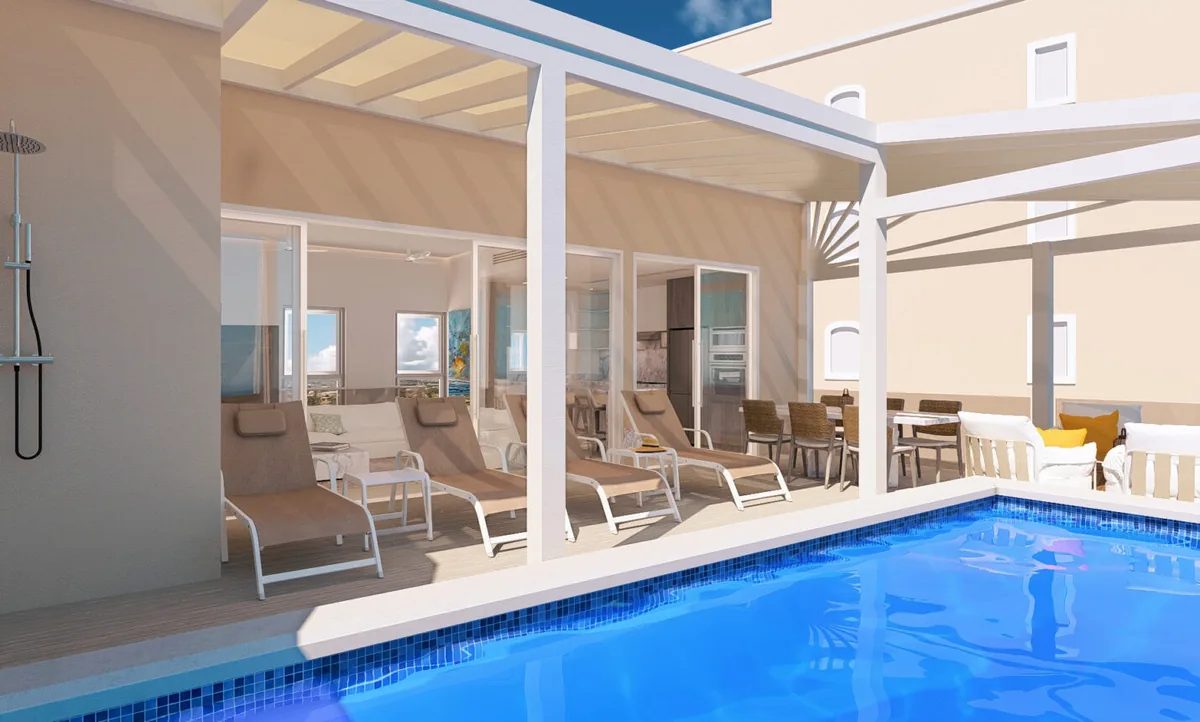
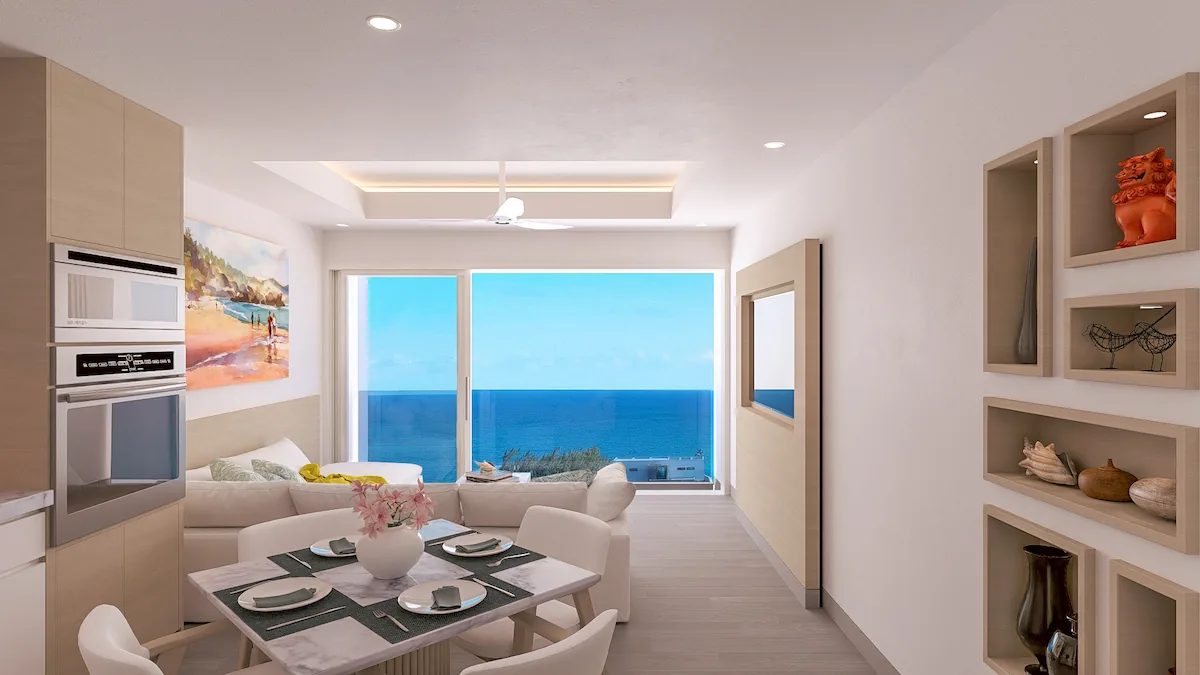
- Off-plan risk, and a delivery date nobody agrees on. Phase 4 is pre-construction. The developer’s launch coverage in 2024 said it was scheduled to open in 2027; one agency currently quotes delivery in 2028. No primary developer statement pinning the date could be found. Payments are structured against construction milestones — foundation, structure, watertight, practical completion — which is the right shape, but tie them to independently verified milestones, establish whether deposits are escrowed and with whom, and get your remedy in writing if delivery slips. Every image you have been shown of Phase 4 is developer CGI, not a photograph of a finished building.
- Prices move, upward. Phase 4 is quoted by the developer from US$399,000 to US$2.2 million as at August 2026, against US$349,000 to US$1.9 million in May 2025 and a floor of US$287,000 in mid-2024. That ladder is the useful context for a pre-construction discount pitch: some of the discount you are being offered has already been taken back.
- Assume you are a cash buyer. Barbados lenders secure against registered title. Whether any lender will take security over a trust interest of this kind could not be confirmed, so budget accordingly unless a bank tells you otherwise on its own letterhead.
The 1887 date is solid; the superlative is the property’s own claim
It opened as a hotel in 1887, and both the resort and Barbados' national tourism site describe it as the oldest continuously operating hotel in the region. The 1887 date is solid; the superlative is the property's own claim and is best quoted as such rather than asserted flatly.
You can swim, but this is the Atlantic coast
Swim with respect: this is the Atlantic coast — powerful waves, an undertow and turbulent water at times. It is excellent for bodysurfing and boogie boarding and is lifeguarded at peak hours, but it is not the flat, wade-in water of the west coast.
Barbados has no private beaches
Under the Beach Control Act all land below the high-water mark is public and there is a designated public access point at Crane Beach. What ownership buys is the cliff, the elevator and the estate above it — not the sand.
Four different assets share this estate
Four things share this estate: the hotel, The Crane Private Residences, a fractional Private Residence Club sold as weeks or points, and a Hilton Grand Vacations timeshare club operating since 2018. They are different assets. The residences are covered on their own page.
It is not freehold — it is a trust interest
Ownership is a right to use held in trust by First National Trustee Company in the Isle of Man, running to the year 3000. You hold a beneficial interest in that trust rather than a registered Barbados title in your own name. The developer says it can be willed, transferred or sold at any time and that the trustee confirms there is no debt, prior ownership or lien. Some agency listings still record the tenure as "Freehold: Yes". That is wrong, and it is worth noticing which ones do it. Even the developer’s own pages are inconsistent, describing the interest as a right to use in one place and as a leasehold in another — which is exactly why you read the deed rather than the website.
What a residence costs, and how the prices have moved
Published asking prices at the time of writing ran from about US$399,000 for a 524 sq ft studio to US$2,199,000 for a 2,477 sq ft three-bedroom penthouse on one portal. Phase 4 is quoted by the developer from US$399,000 to US$2.2 million as at August 2026, against US$349,000 to US$1.9 million in May 2025. Prices move, they have moved upward, and they differ between agents for the same stated floor plan. Treat any figure you read online, including mine, as the starting point for a written quote rather than a price list.
What the Community Fee and the Residence Fee cover
The developer itemises the Community Fee as covering building insurance, property taxes, external and common-area maintenance, landscaping, pool service, common-area utilities and refuse collection. It also covers alarm systems, smoke detection, CCTV in the parking garage, internet, long-distance landline calls, cable television and a 10% management fee. On top of that sits a proportional share of resort services: 24-hour gated security, the pools, fitness facility, kids’ club, tennis courts, beach access and concierge. It does not separately publish what the Residence Fee buys, and no published dollar figure for either charge exists for any unit type. That is exactly why you should insist on the current charge for your specific unit, split by component, with five years of history and the insurance deductible, in writing before exchange.
The managed rental programme, and the terms to extract
The resort operates a managed rental program and handles the marketing, bookings and guest stays, so you are not fielding messages from another time zone. The management fee is not published anywhere verifiable, so take the rate from the management agreement rather than a brochure — along with whether it applies to gross or net revenue, who pays commissions and housekeeping, and how many owner nights you retain.
No citizenship in Barbados, and no automatic residency
Not automatically, and never citizenship — Barbados does not run a citizenship-by-investment program, only residency. Owning property confers no right of residence by itself, and the six-month visitor allowance for US, UK and Canadian citizens is not residence either. Property owners can apply for a Category 2 Special Entry and Residence Permit, which asks for Barbados property worth at least US$300,000 and costs US$5,000 per renewable five-year term, becoming indefinite from age 60, and which does not permit you to work in Barbados. Whether a trust right-to-use interest satisfies that ownership test is unresolved so far as the public record shows, so confirm it with Immigration in writing before you buy for that reason.
How this differs from the Crane’s fractional ownership
They are different products on the same estate, and they get confused constantly. The Private Residences sit on their own five-acre site of five buildings, deliberately separated from the hotel and from the fractional-ownership buildings, and you take the whole residence. Fractional ownership buys weeks instead — one secondary resale site listed Crane fractional interests from US$8,500 for a single fixed week up to US$999,000 for a multi-week interest in a large unit. Those numbers tell you nothing about what a whole residence is worth, but they do colour how some buyers hear the name, and they are a useful reminder that resale on this estate is a real and visible market.
Liquidity and control: a trust interest, not a registered title
Liquidity and control. You are trading a registered title for a trust interest, and in return you get a same-day close, no conveyance taxes and a resort that runs itself. That is a fair trade for someone buying a genuine lock-and-leave second home they intend to use for a decade or more. It is a poorer trade for someone buying to resell quickly. The buyer pool is narrower, the developer is selling new phases into the same market, and resale asking prices on the same portal are already inconsistent by size. Whether mortgage finance against this kind of interest exists at all could not be confirmed.
- Barbados market guide
- Tax residency options


Dan Merriam
“With almost 20 years of experience as a real estate investor and a deep understanding of the Caribbean market, I can provide a behind-the-scenes perspective that the sales team won’t.”
Dan Merriam is a licensed real estate and investment migration professional who has lived full-time in the Eastern Caribbean since 2021. He and his team have handled more than US$75M in transactions across the region in the past 24 months, from resale villas to new-build residences and CBI-approved property. They show homes in person or by live video and walk you through what each one really costs to own.
Explore The Crane Resort & Residences with Dan.
Send a private inquiry to see current availability, ownership structure and pricing.
Request a Consultation