
Sugar Beach
Between the Pitons — a Viceroy-managed resort community in one of the region's most photographed settings.
- IslandSt. Lucia (Val des Pitons)
- AnchorViceroy-managed resort
- RouteNot CBI-approved
- MarketEstablished resale
- FromUS$6,000,000 whole
Residences available.
Every unit currently on the book here, with what is off-market available on request.

Get the current price list for Sugar Beach
Dan sends what is available now, including residences that are not advertised, with prices, floor plans and terms. He replies personally within one business day.
- Tell Dan what you have in mindBudget, timing and the kind of home. Two minutes, and it stays private.
- Get pricing and availabilityCurrent prices, what is genuinely available and what is coming, within one business day.
- Talk it throughA 30-minute call with Dan when you are ready. No fee, no obligation.
About Sugar Beach
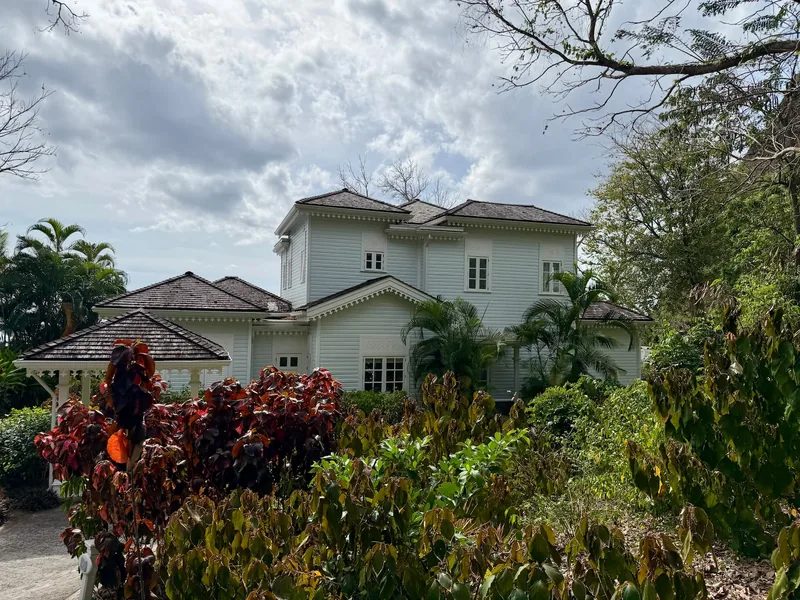
Sugar Beach, A Viceroy Resort, sits in the Val des Pitons near Soufrière — arguably the most dramatic setting in the Caribbean. It's an established resort-residential community whose villas and residences have been built over the past decade-plus, resell regularly, and have appreciated over that period.
There's no major new-build phase at present, so this is largely a resale market — which means real comparables and a liveable, rentable asset rather than off-plan risk. Sugar Beach is not on St. Lucia's approved list for citizenship by investment, so this is a lifestyle and investment purchase rather than a passport route.
Read Dan’s full review of Sugar Beach
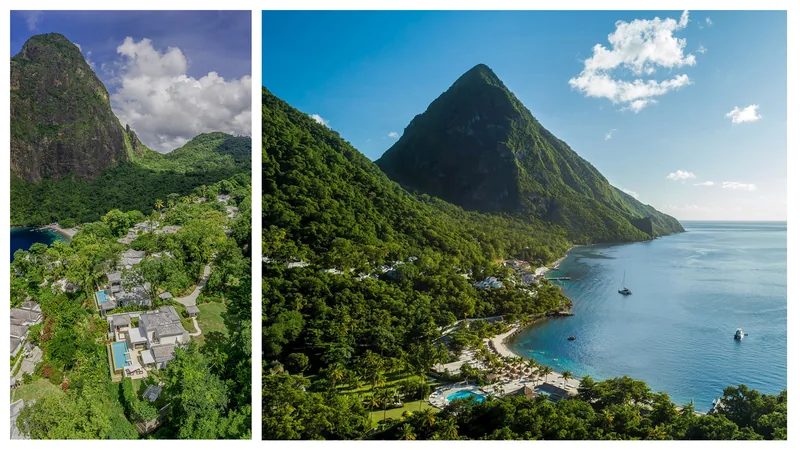
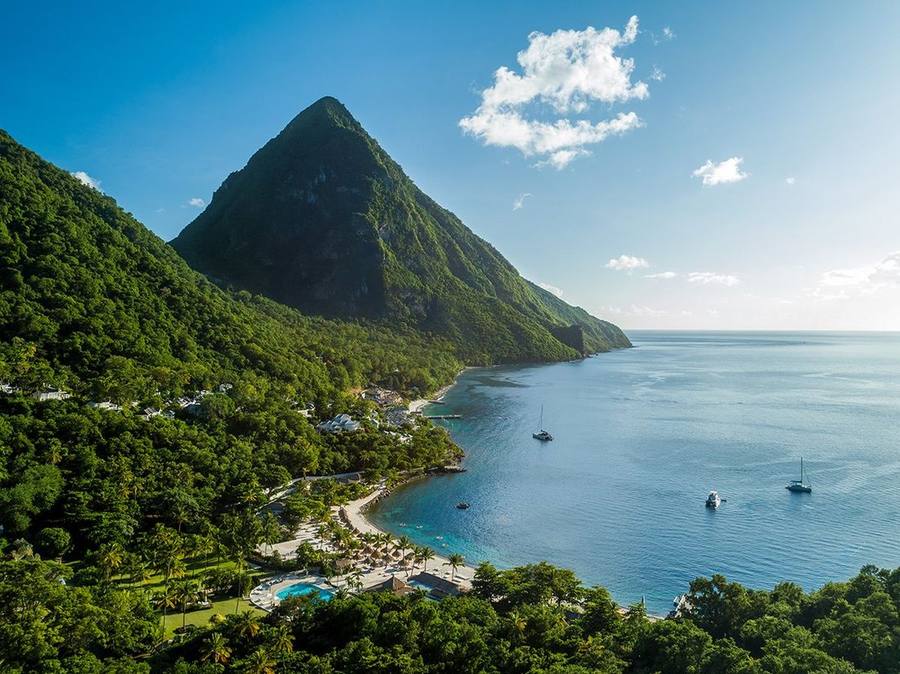
Sugar Beach sits in Val des Pitons at Soufrière, in the valley between Gros Piton and Petit Piton, on St. Lucia’s most recognisable stretch of coastline. The two peaks rise straight out of the water on either side of the bay, and the light between them changes hour by hour. The former Jalousie estate is now a five-star hotel with a small residential component inside it.
Forbes Travel Guide describes a 130-key resort — guestrooms, villas, beachfront bungalows and residences all counted together — set in 100 acres of rainforest, comprising 25 one- to four-bedroom residences plus a single nine-bedroom residence. St. Lucia MLS listings for the same resort describe a 130-acre property, and other figures circulate again, so treat the acreage as approximate. The residential count is firmer: on the order of twenty-six houses, from one secondary source and as a snapshot rather than a register. Either way, when people talk about “buying at Sugar Beach,” that is roughly the size of the market.
Here is the thing buyers get wrong, and it needs correcting most weeks. St. Lucia runs a citizenship-by-investment programme, and that programme has a real-estate route, so people reasonably assume that spending seven or eight figures on a St Lucian house at the island’s most famous address must qualify. It does not. The government’s route requires a minimum of US$300,000 in a project it has specifically approved, and Sugar Beach does not appear on that list. A US$300,000 unit in a listed development earns citizenship; a US$8.95 million house here does not. Buy for the house and the setting, with your eyes open — not for a passport.
What you actually own at Sugar Beach
Third-party listing research on the development describes the residences as freehold, conveyed with a title deed. That is the right starting point: you are buying land and a house on St Lucian soil, not a club membership, a right-to-use, or a share in an operating company.
What you are also buying, unavoidably, is a permanent relationship with the hotel that surrounds you. Read the published numbers properly, because they are easy to misread in your favour. The residences are not additional to the 130 keys — they are counted within them, alongside the guestrooms, villas and beachfront bungalows. So the residential piece is a small minority of a working five-star resort, and the rest of that key count is inventory the operator sells against yours.
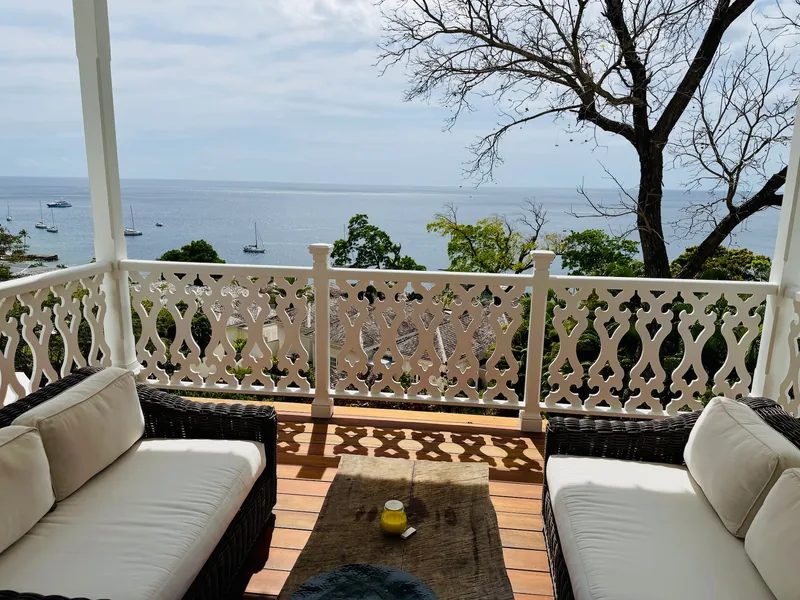
The access road, the beach club, the security gate, the restaurants, the water and the staff belong to the hotel operation, and your house sits inside it. That is the appeal — a serviced estate you never have to run yourself — and it is also the exposure. You do not control the thing that gives your asset its value.
The inventory that actually trades is thin. One four-bedroom beachfront residence currently listed on the St. Lucia MLS is asking US$8,950,000: 5,310 sq ft of house on 27,749 sq ft of land, designed by Michaelis Boyd Associates. A second, a four-bedroom oceanfront residence of 5,024 sq ft on 9,766 sq ft of land, is listed with no public price. A third-party research hub run by a citizenship advisory firm puts resale villas from around US$2.5 million and estate homes in a roughly US$4 million to US$10 million-plus band; that is a marketing-adjacent source, so treat it as orientation rather than a price list. With this few units, one motivated seller sets the market and one stubborn one removes it.
One practical note before you get attached to the view: non-nationals need an Alien Landholding Licence to hold land in St. Lucia, and the deed cannot be registered without it. Published estimates of how long that takes range from a few weeks to several months, and agency guides do not agree with one another. It is a process, not a formality, and it belongs in your timeline from day one.
Does Sugar Beach qualify for St. Lucia citizenship? No — and here is the route that does
St. Lucia’s citizenship-by-investment programme offers a real-estate option at a minimum of US$300,000 plus applicable administration fees, and the investment must be in an approved real estate development and held for a minimum of five years. There is also a National Economic Fund contribution route published at US$240,000 for a main applicant with up to three qualifying dependants, an approved-enterprise route at US$250,000 plus administrative fees, and a government bond route at a minimum of US$300,000, likewise held for five years.
The word carrying all the weight is approved. The government publishes its list of approved real-estate and enterprise projects. At the time of writing that list runs to just two approved projects, and Sugar Beach is not one of them. Third-party research on the development states it flatly: ownership here does not confer eligibility for citizenship.
So if a second passport is any part of your objective, treat these as two entirely separate transactions and price them separately. Do not let anyone bundle them for you, and be sceptical of any marketing that puts the words “Sugar Beach” and “citizenship” in the same paragraph. If you want both, the structure is a qualifying investment in a listed project for the citizenship, and Sugar Beach — or anywhere else you actually want to sleep — for the house. The routes are compared, with figures, in donation versus real estate.
If you are American, there is a further point not to skip. US citizens are taxed by the United States on their worldwide income regardless of where they live or what other citizenship they hold. A second passport does not change that. Renouncing US citizenship is the only exit, and it is an irreversible step with its own tax consequences that needs specialist US advice before it is ever seriously contemplated. A Caribbean passport is a mobility and contingency asset. It is not a US tax plan, and anyone selling it to you as one is telling you something untrue.
The carrying costs: getting in, holding, and getting out
Caribbean brochures are good at the purchase price and quiet about everything either side of it. The St Lucian side of that is set by government rather than by this resort. The alien landholding licence and its fees, conveyance stamp duty, the conveyancing scale, annual property tax and VAT are all set out on the St Lucia real-estate guide.
One structural point belongs here, because it changes the arithmetic rather than merely adding to it. Stamp duty on a conveyance in St Lucia falls much more heavily on a non-resident vendor than on a resident one. It is also charged on the gross sale price rather than on your gain. On an exit near US$9 million, the difference between the two treatments is a very large number leaving before you count agency commission or legal fees. Any story about medium-term appreciation has to clear that hurdle before it means anything, and it belongs in your model from the first conversation rather than at exit. Have a St Lucian attorney confirm in writing which treatment will apply to you.
What is not published anywhere, and what you must therefore get in writing before you go firm:
- The annual homeowners’ association, maintenance or resort-services charge.
- How it is calculated, and how much it has moved in the last five years.
- Who sets it.
- What happens to it if the hotel’s operating costs rise.
In resort-attached ownership, that recurring charge is frequently the difference between a good decision and an expensive one, and its absence from the marketing is not evidence that it is small.
Add the buildings insurance premium and the named-storm deductible to that list. This is a steep bay in the hurricane belt, and the deductible matters as much as the premium.
Renting it out when you are not there
A rental programme managed by the resort is available to owners — that much is documented. What is not published anywhere verifiable is the part that determines whether it is worth doing.
- The revenue split between owner and operator.
- What is deducted before the split.
- Whether participation is optional or effectively required.
- How your house is priced and positioned against the hotel’s own rooms.
- Whether there are blackout periods or notice requirements on your own use.
The structural point stands without any of those numbers. Your residence is not competing in an open rental market. It sits inside a 130-key resort, and the remaining keys are inventory the same operator sells through the same booking channel. When occupancy softens, the operator has an obvious interest in filling its own rooms first. That is not an accusation; it is simply how the incentives sit, and it is why the contract language matters more than the projection.
Before you sign anything, get the following in writing.
- The exact split, and the deduction waterfall.
- A definition of “net”.
- How maintenance, refurbishment reserves and furniture replacement are funded, and who decides when they are spent.
- Your guaranteed personal-use nights, and how they are booked.
- The term of the agreement, and your exit from it.
- Audited historical performance for comparable residences — not a pro forma.
If the operator will not provide realised historicals for actual residences, that refusal is your answer.
Treat any yield figure that arrives without a signed contract behind it as marketing, and underwrite the purchase as though the rental income were zero. If the numbers only work with the rental income, you cannot afford the house.
The risks worth raising unprompted
What you are buying here is a finished house inside a mature hotel, at a setting that cannot be replicated. The trade is control: the resort runs the estate and you do not think about it, which is the appeal and the exposure in one sentence. Arrival works in your favour — Soufrière is roughly 45 to 60 minutes by road from Hewanorra, against 70 to 90 minutes to Rodney Bay and Gros Islet in the north — though the Soufrière drive itself is mountainous.
You are buying inside a World Heritage property under active scrutiny. The IUCN’s 2025 World Heritage Outlook assessment rates the Pitons Management Area as Significant Concern. It finds that the construction of vacation homes and resorts within the area is degrading aesthetic values and threatening the site’s Outstanding Universal Value, and that the outlook for those values has been declining because of poorly controlled development. The assessment names development in Sugar Bay as not fully complying with the Policy Area Design Guidelines — whether that refers to this resort or to a neighbouring bay could not be confirmed, and you should not assume either way. Recommendations from the Limits of Acceptable Change study were incorporated into the Physical Planning and Development Act in 2024, which declared the Pitons Management Area an Environmental Protected Area. In practice: assume future alteration, extension or rebuild will be constrained, and have your attorney confirm the exact planning status of anything you buy or intend to change.
Liquidity is genuinely poor. A residential count in the mid-twenties means there is no depth of market. Exits at this price point in St. Lucia are measured in seasons rather than weeks, and the non-resident vendor’s exit cost sits on top.
Brand and operator risk is real. A great deal of the price is the hotel’s flag and service standard. Management agreements have terms and renewal dates. Ask what happens to your rental programme, your service access and your resale story if the operator changes.
Off-plan is a different transaction entirely. Any images of an unbuilt residence are developer CGI renderings, not photographs of a finished product. If you buy off-plan, the diligence shifts to the developer’s balance sheet, the escrow arrangements, the completion covenants and your remedies for delay.
Get the shoreline in writing. Have your attorney spell out precisely what your title conveys at the waterline and what is common, hotel-controlled or public — do not infer it from a listing photograph or the phrase “private beach access.”
None of this is a reason not to buy. It is a reason to buy on facts, and to make sure the boring documents get read before the deposit moves.
Why "established" is the whole point
The single hardest thing to find in Caribbean real estate is a record you can look at. At Sugar Beach you can see an operating resort and ask how homes have traded over the years.
That matters in concrete ways:
- There is a functioning resale market. Homes here have changed hands more than once. Those prices are private, though. The transaction record here is not published, so sold figures cannot go on a web page. Comparables can be walked through privately.
- The five-star standard is established. The resort has operated at that level for years, so you can assess the service in operation.
- The price history is private. No public record of paired sale prices exists, so treat any appreciation percentage you are quoted as unverified until someone can say where it came from.
Buying here means a completed home in an irreplaceable location rather than ground-floor pricing on a launch.
The location is the asset
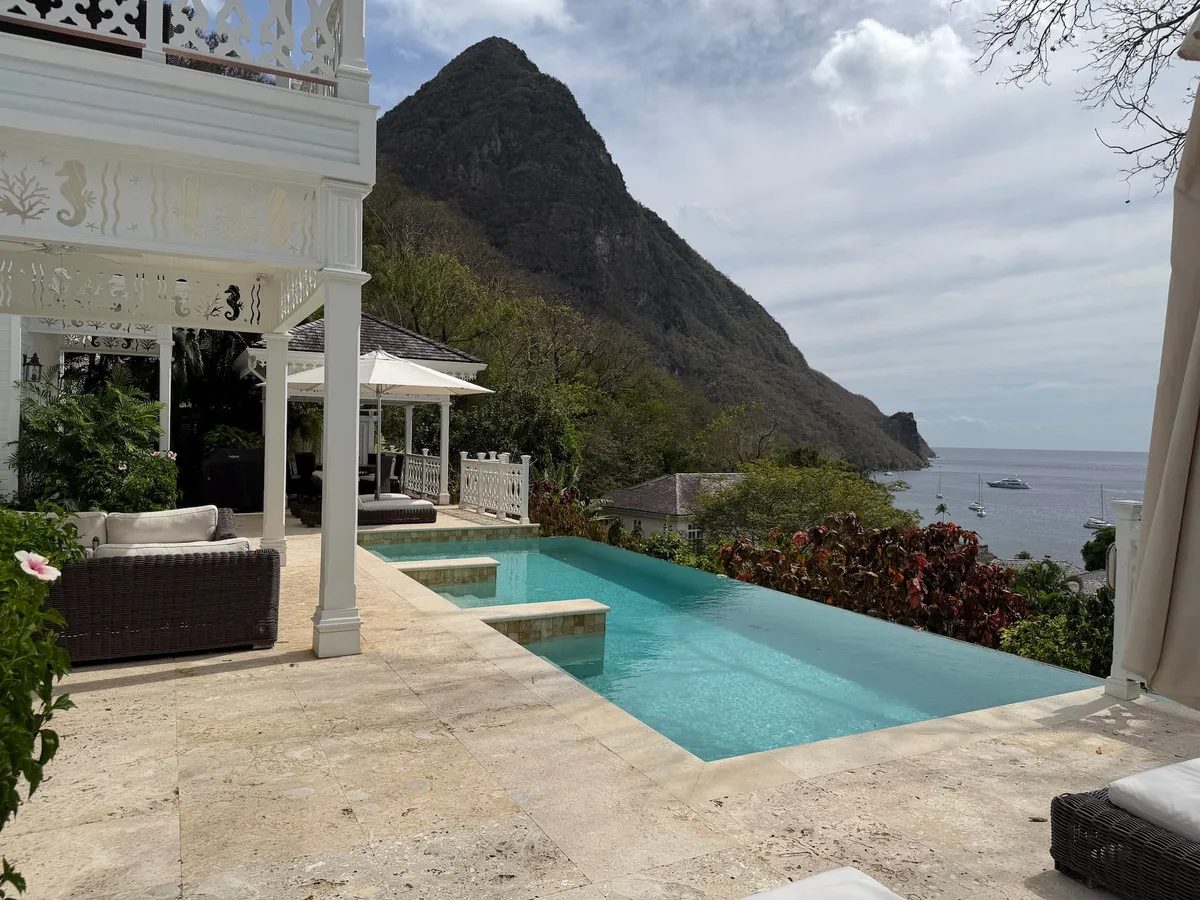
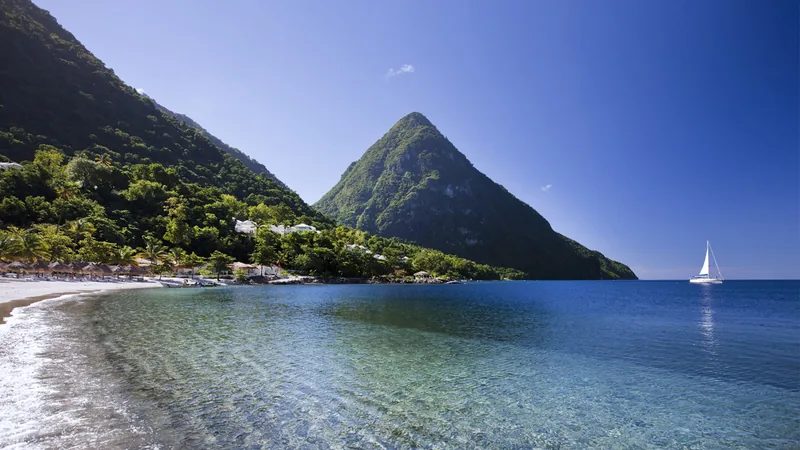
The Val des Pitons is a UNESCO World Heritage site, and there is genuinely nowhere else like it. Gros Piton and Petit Piton rise straight out of the sea, with rainforest around them and the beach between. Yachts anchor in the bay below. This is the image that sells St. Lucia to the world, and Sugar Beach sits in the middle of it.
That location does two things for you as an owner. It underpins value, because they are not making more of it. It also drives rental demand, because people will pay to stay somewhere this photogenic. It is the reason resale holds up: the setting does not date.
Who operates Sugar Beach
Viceroy is a recognised luxury hospitality brand, and at Sugar Beach it runs an established five-star operation with a working resale market behind it. The visible end of that is the Great Room, its marble floor open to the sea. According to the operator’s own page, the resort also has a PADI dive facility, The Rainforest Spa and butler service. The operator matters in practical terms: who sets the service standard, who runs the rental program and on what split, and what the management agreement obliges you to as an owner. Those answers sit in the management agreement and the owner documents, so ask to see them early.
How an operator is positioned is part of valuing any branded residence, and the branded-residence buyer’s guide covers the fee stack, what rental actually nets and how these homes resell.
How it compares in St. Lucia and the region
St. Lucia has few established resort-residential communities of this kind. Newer projects around Rodney Bay and the island’s northern tip are building that market out, in a different St. Lucia from the Soufrière coast. Sugar Beach’s resale history makes it a useful reference point when weighing other developments on the island.
Against the wider Caribbean, it is worth setting Sugar Beach next to branded residences on other islands to see what an established, brand-managed home in a trophy location costs against a pre-construction alternative. The St. Lucia market guide and what a Caribbean budget really buys are the right context.
Who it suits
It suits a buyer who wants a completed, five-star home in the most dramatic setting in the Caribbean, values a functioning resale market and an operating record over ground-floor pricing, and intends to genuinely use and enjoy the property, with rental as a bonus.
It suits less well a buyer looking for pre-construction pricing, or one who needs the property to be CBI-approved without checking.
Before you commit
With resale property your diligence differs from a launch, and it is standard for any purchase of this kind. You want what comparable homes actually sold for, the service charges and rental-program terms, the condition of the specific villa, and, if it matters to you, whether it qualifies for citizenship.
Request a consultation to talk through Sugar Beach. I can walk through the full cost of ownership for a specific villa, including management and rental terms, and tell you what I would check on the specific unit.
There is no fixed price list — the current data points
There is no fixed price list, because only a couple of dozen residences exist and very few are on the market at any time. As a concrete current data point, a four-bedroom beachfront residence of 5,310 sq ft on 27,749 sq ft of land is listed on the St. Lucia MLS at US$8,950,000. A third-party research hub run by a citizenship advisory firm puts resale villas from around US$2.5 million and estate homes in a roughly US$4 million to US$10 million-plus range; that is orientation, not data. With inventory this thin, individual asking prices tell you more than any range does.
Sugar Beach is not one of the two approved projects
St. Lucia’s real-estate route requires a minimum of US$300,000 plus administration fees in a development the government has specifically approved, held for at least five years. The published list of approved projects runs to just two, Sugar Beach is not one of them, and third-party research on the development confirms that ownership here does not confer eligibility. If you want both a passport and a house at Sugar Beach, they are two separate transactions.
Foreigners can own freehold, with an Alien Landholding Licence
Non-nationals can own freehold in St. Lucia, but you need an Alien Landholding Licence before the deed can be registered. The fees and the current schedule are on the St Lucia real-estate guide. Published estimates of the processing time vary widely between agency guides — from a few weeks to several months — so build the licence into your timeline rather than treating it as a closing formality, and have your attorney give you a realistic date in writing.
A resort-managed programme with no published commercial detail
A rental programme managed by the resort is available to owners. What is not published is the commercial detail: the owner and operator revenue split, what is deducted before that split, whether participation is optional, blackout periods on your own use, and the agreement’s term. Remember that your house sits inside a 130-key resort and competes for guests with the operator’s own rooms through the operator’s own booking channel. Get the split, the deduction waterfall and audited historicals for comparable residences in writing, and underwrite the purchase as though the rental income were zero.
The resort-services charge is the figure nobody publishes
Two sides. Annual property tax and the consumption taxes that fall on what a resort-managed residence uses are set by government rather than by the resort, and are on the St Lucia real-estate guide. The figure you must obtain before going firm is the one nobody publishes: the annual homeowners’ association or resort-services charge, how it is calculated, who sets it, and how much it has increased over the last five years. Add the buildings insurance premium and the named-storm deductible to the same request.
Selling costs a non-resident more, and it is charged on the price
More than a resident pays, and it is charged on the sale price rather than on your gain. That is the structural point, and it is the single number that most often breaks an appreciation argument at this price level — before agency commission and legal fees. The current rates for resident and non-resident vendors are on the St Lucia real-estate guide. Have your attorney confirm in writing which treatment applies to you, and put it in your model from the first conversation rather than discovering it at exit.
The Pitons Management Area, and what the 2024 Act changed
Three things. First, it sits inside the Pitons Management Area. The IUCN’s 2025 World Heritage Outlook rates that area as Significant Concern, finding that vacation-home and resort construction within it is degrading the site’s values. Recommendations from the Limits of Acceptable Change study were then written into the Physical Planning and Development Act in 2024, which declared the area an Environmental Protected Area. Expect real constraints on altering or rebuilding. Second, with only a couple of dozen residences in total, resale is slow, and the heavier exit cost on a non-resident vendor compounds it. Third, much of the value rests on the hotel operator’s brand and service, which you do not control. It can still be the right purchase — but as a place you genuinely want to own and use, not as a yield play or a citizenship route.
Where is Sugar Beach in St. Lucia?
In the Val des Pitons near Soufrière, on the south-west coast, on the beach between Gros Piton and Petit Piton — a UNESCO World Heritage setting widely regarded as one of the most beautiful in the Caribbean.
Can you buy property at Sugar Beach?
Yes. Sugar Beach is an established resort-residential community with villas and residences that have traded on the resale market. No new-build phase is currently advertised, so most opportunities are resales.
Has Sugar Beach real estate appreciated?
There is no public price history for Sugar Beach: sale prices here are private rather than published, so ask someone who has actually seen the trades to walk you through comparables instead of relying on a headline appreciation figure. The setting is finite and does not date, which supports demand.
Who operates Sugar Beach, and what does the resort offer?
Viceroy Hotels & Resorts operates Sugar Beach, A Viceroy Resort. Its own site lists a PADI dive facility, The Rainforest Spa and butler service, and recognition in Travel + Leisure’s 2026 World’s Best Awards and Condé Nast Traveler’s 2026 Triple Crown. As an owner you will want to see the management agreement and the rental terms.
Is Sugar Beach a good investment?
Sugar Beach is best approached as a home first: a completed residence in a world-class location with a functioning resale market. With no public price history, ask for comparables on the specific villa and treat rental income as a bonus. You trade the ground-floor pricing of a pre-construction launch for a finished home you can inspect.
- St. Lucia citizenship
- St. Lucia market guide

Dan Merriam
“I’ve been investing and doing business in St. Lucia since 2022. The market has had its challenges over the past decade, but it’s well placed for growth, especially for investors who want to buy and renovate existing villas and luxury homes.”
Dan Merriam is a licensed real estate and investment migration professional who tracks pricing and availability across the region’s resort and branded developments. He compares the units for you, explains the ownership, rental program and citizenship rules, and builds a data room with detailed pricing and availability when you’re ready.
Explore Sugar Beach with Dan.
Send a private inquiry to see current availability, ownership structure and pricing.
Request a Consultation