
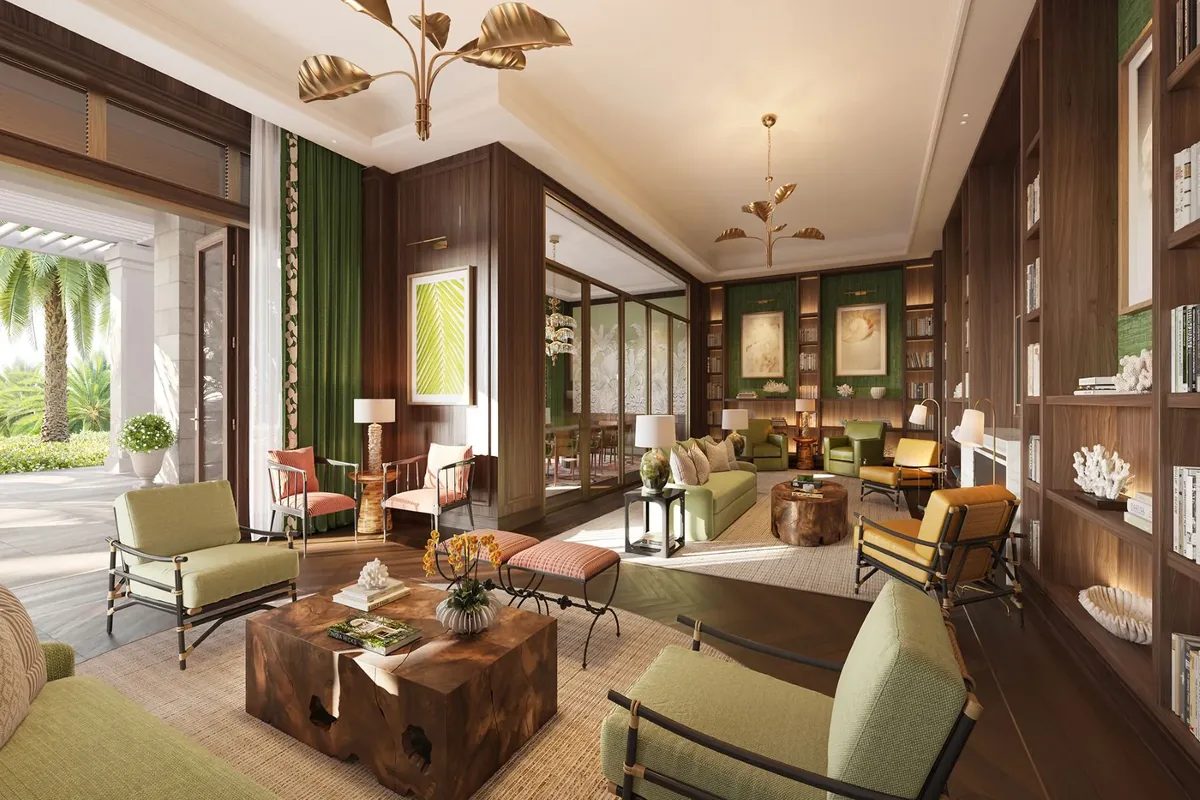
Four Seasons Ocean Club Residences, Bahamas
New, Four Seasons-managed residences sold off-plan on Paradise Island — the storied former One&Only estate. An independent read, not a resort sales pitch.
Residences available.
Every unit currently on the book here, with what is off-market available on request.

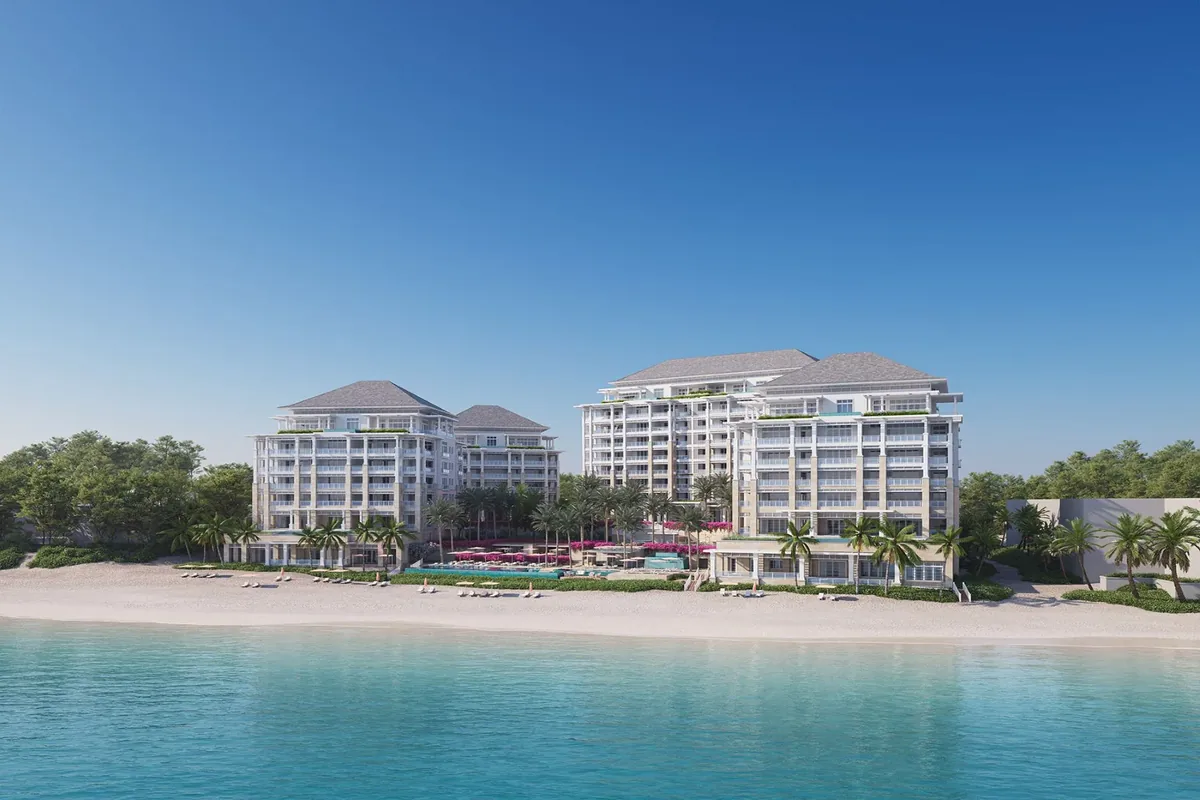
There are branded residences, and then there are the handful of addresses that were legendary long before a brand arrived. The Ocean Club on Paradise Island is one of them — Huntington Hartford's old estate, later the One&Only, its gardens and cloister known from a Bond film, now Four Seasons-managed. If you are looking at a residence here, you are buying into genuine history and a top-tier flag. My job is to tell you what that actually gets you, what it costs, and where the catches are — as someone who represents you rather than the resort.

In short: the residential collection is a reported 67 new-build, Four Seasons-managed residences sold off-plan, part of a roughly US$400M expansion targeted to open around 2027 (recent reporting points to 2028), a short causeway from Nassau. The key nuance is that the resort and location are long-established and proven, but the residences themselves are new construction — so you get a storied address and genuine pre-construction and delivery risk, not a finished home you move into today. The Bahamas has no citizenship-by-investment program, but a substantial purchase can support permanent residency, which carries a real tax advantage.
Why the address carries weight
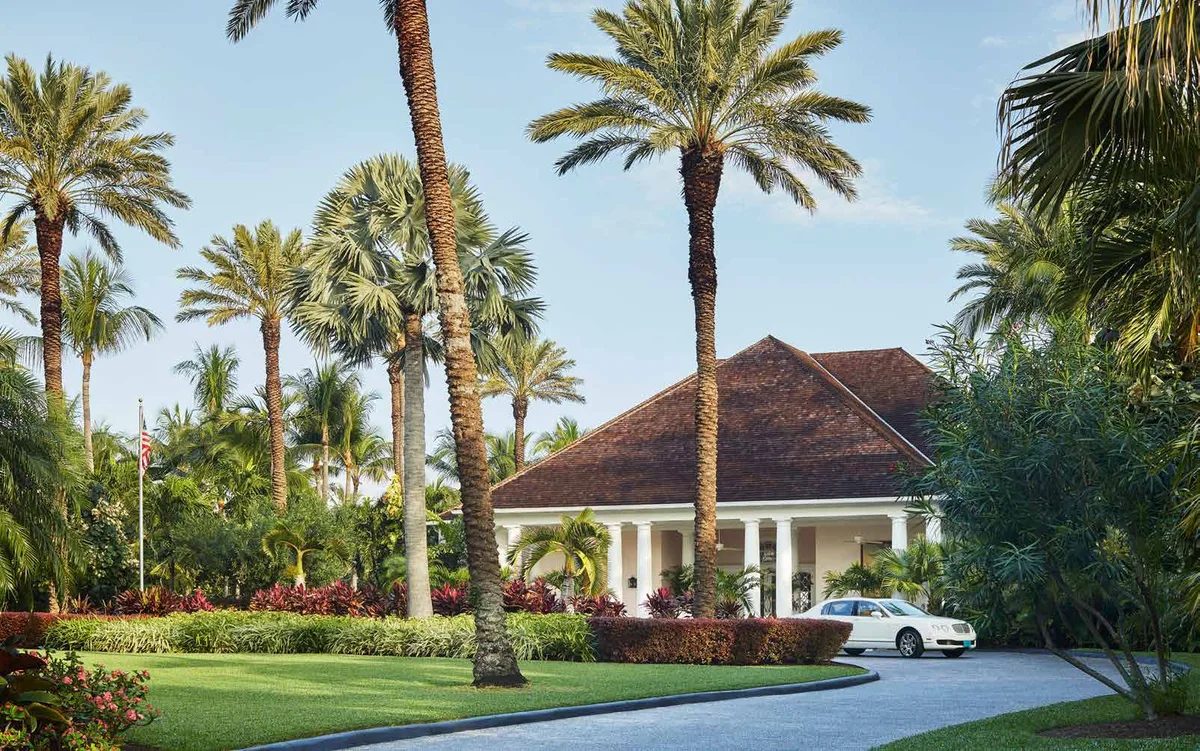
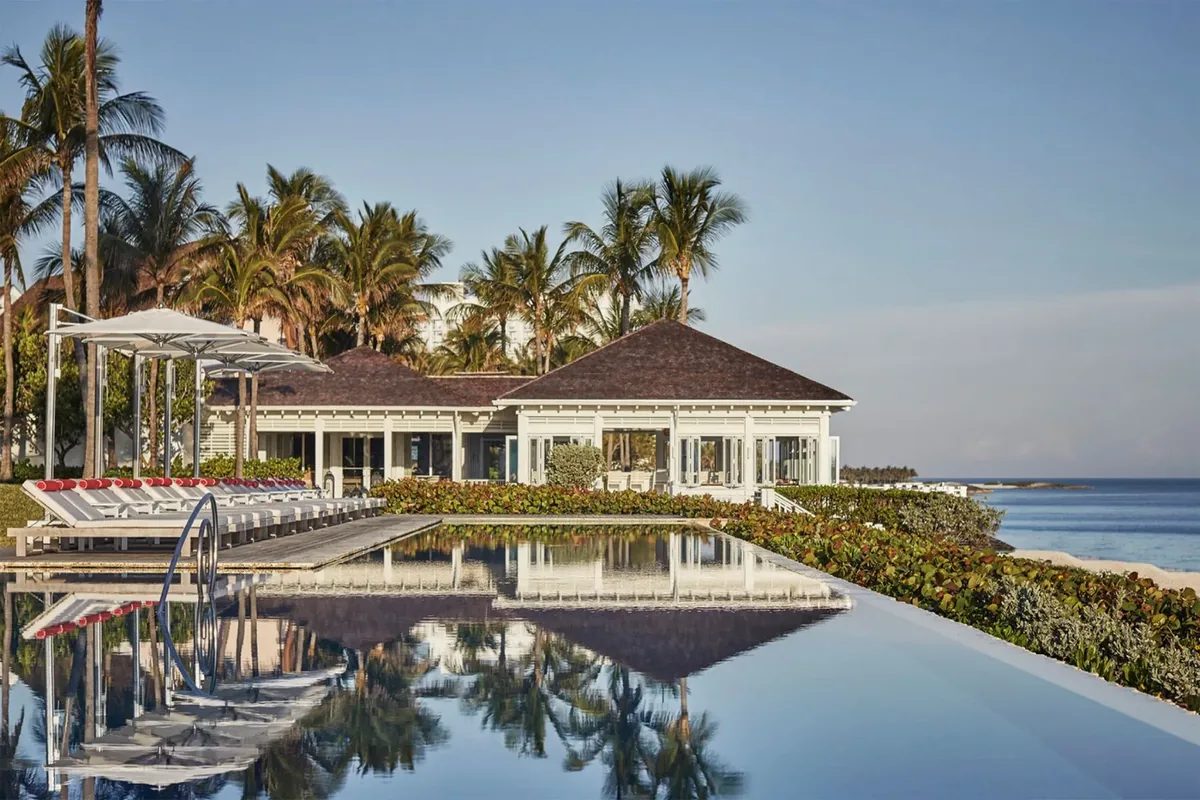
Most branded residences borrow prestige from the brand. Here the place had prestige first — manicured Versailles-inspired gardens, a 12th-century French cloister, and a beach that was a byword for discreet luxury for decades under Huntington Hartford and then the One&Only, before Four Seasons added its operating standard on top.

For an owner that matters in durable ways. Paradise Island and Nassau are established, accessible and liquid — direct flights from the US east coast, a deep pool of luxury buyers and renters, and infrastructure that already exists rather than being promised. And the history is irreplaceable: you can build a new resort, but you cannot manufacture this provenance. Trophy addresses with real track records tend to hold value better than speculative launches.
New-build, sold off-plan, managed, scarce
Two things make this a relatively clean luxury buy, and one nuance makes it riskier than it first appears.
A genuine top-tier flag. Four Seasons sits at the very top of the branded-residence hierarchy — the tier that commands the highest premiums globally, because the management, service and brand equity are real. When I calibrate brands for buyers, Four Seasons is the benchmark others are measured against; the region's options are set against each other in six Caribbean branded residences compared.
Turnkey on delivery, managed, few in number. Here is the nuance that matters: the resort and location are long-established, but the residences are new construction. A reported 67 Four Seasons-managed residences are being sold off-plan, targeted to open around 2027 (recent reporting points to 2028). "Turnkey" here means delivered fully furnished on completion — not a home you can move into today — so confirm the current build status, the realistic delivery date and how your deposit is protected. The standard off-plan due diligence applies even at a storied address. Scarcity in a trophy location supports value; limited availability means the specific unit matters.
Available residences

Residency and tax — not citizenship
This is where the Bahamas differs from the Eastern Caribbean, and it is important. The Bahamas has no citizenship-by-investment program — you cannot buy a passport here. What it offers instead is permanent residency, which a substantial real-estate investment can support, and no income, capital gains or inheritance tax. For the right buyer the appeal is not a second passport; it is tax-advantaged residency at a trophy address, an hour from Miami. That is a fundamentally different value proposition from a CBI island, and for wealth-planning purposes often a more powerful one. Weigh it against the other no- and low-tax options in second residency versus second citizenship.
How it compares
Within the Bahamas, the Ocean Club is the historic, top-tier, Paradise Island option — set it against the golf-and-marina Albany on New Providence and the private-cay Baker's Bay in the Abacos. The Bahamas market guide sets the context, and the Ocean Club community page covers the wider estate, its villas and the historic resort. Against the Eastern Caribbean the trade is clear: islands like St Kitts & Nevis offer citizenship; the Bahamas offers tax-advantaged residency with easier US access. Which matters depends entirely on whether you need a passport or a tax base — a distinction I help buyers get right.

Who it suits
It suits a buyer who wants a top-tier, Four Seasons-managed home at a storied, liquid address with easy US access, is comfortable buying off-plan (delivery ~2027–2028) for the provenance and the brand, and is drawn to tax-advantaged residency rather than a second passport.
It suits less well a buyer whose primary goal is citizenship (the Bahamas offers none), one relying on headline rental yield, or one working to a mid-market budget.
What the Ocean Club actually is
A Four Seasons-managed resort on Paradise Island, Bahamas, on the former Huntington Hartford estate later known as the One&Only Ocean Club. Its residential collection is a reported 67 new, Four Seasons-managed residences being sold off-plan (targeted to open around 2027, with recent reporting pointing to 2028) at one of the region's most storied luxury addresses, a short causeway from Nassau.
What the residences cost, and what to confirm in writing
The collection runs from roughly US$7.31M for a two-bedroom-plus-den residence to US$15.74M for a four-bedroom-plus-den penthouse, sold off-plan ahead of a targeted opening around 2027 (recent reporting points to 2028). Confirm current availability, pricing and the delivery timeline in writing, along with the Four Seasons management and rental-program terms and the annual service charges, before relying on any figure.
No Bahamian citizenship — the draw is tax-advantaged residency
The Bahamas does not operate a citizenship-by-investment program. A substantial real-estate investment can, however, support an application for permanent residency, and the Bahamas levies no income, capital gains or inheritance tax — so the draw is tax-advantaged residency rather than a second passport.
No income, capital gains or inheritance tax
The Bahamas has no income tax, no capital gains tax and no inheritance tax, which is a significant part of the appeal for international buyers. Combined with permanent residency and easy access to the US east coast it can be a powerful wealth-planning base — though you should take advice on your specific tax situation, and US citizens remain taxed by the United States on worldwide income regardless.
Underwrite it as new construction, not a finished asset
As a new, Four Seasons-managed home sold off-plan at a historic, liquid address with strong US access, it can be a solid luxury buy — but underwrite it as new construction, not a finished asset: confirm the build status, delivery date (targeted ~2027, recent reporting ~2028) and deposit protection, with rental income a conservative bonus and top-tier service charges factored in, rather than a high-yield rental play.
Where it sits on Paradise Island
On Paradise Island, Bahamas, connected by causeway to Nassau and its international airport, with direct flights from much of the US east coast. The estate is known for its manicured gardens, a 12th-century French cloister and its beachfront — a setting familiar from film and decades of luxury history.
- Tell Dan what you have in mindBudget, timing and the kind of home. Two minutes, and it stays private.
- Get pricing and availabilityCurrent prices, what is genuinely available and what is coming, within one business day.
- Talk it throughA 30-minute call with Dan when you are ready. No fee, no obligation.

Dan Merriam
“With almost 20 years of experience as a real estate investor and a deep understanding of the Caribbean market, I can provide a behind-the-scenes perspective that the sales team won’t.”
Dan Merriam is a licensed real estate and investment migration professional who has lived full-time in the Eastern Caribbean since 2021. He and his team have handled more than US$75M in transactions across the region in the past 24 months, from resale villas to new-build residences and CBI-approved property. They show homes in person or by live video and walk you through what each one really costs to own.
Considering the Ocean Club?
Send a private inquiry and Dan will give you an independent read on whether it fits your goals.
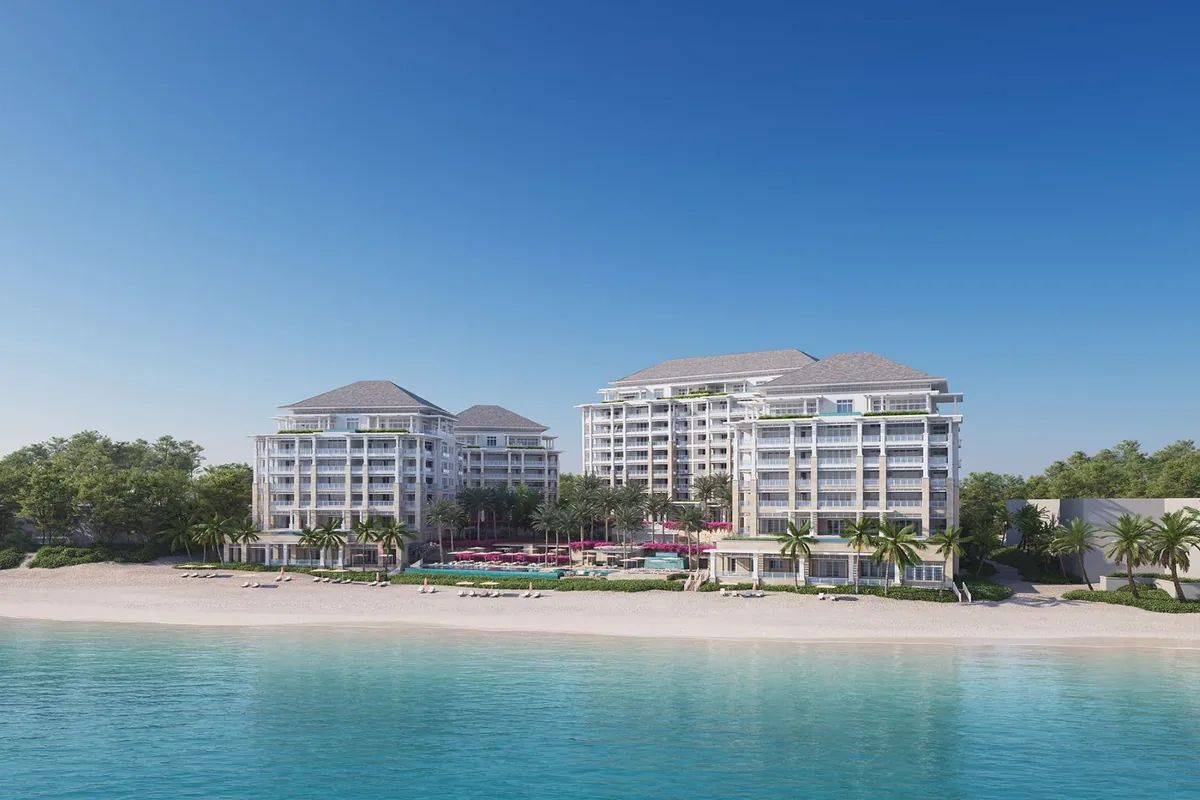
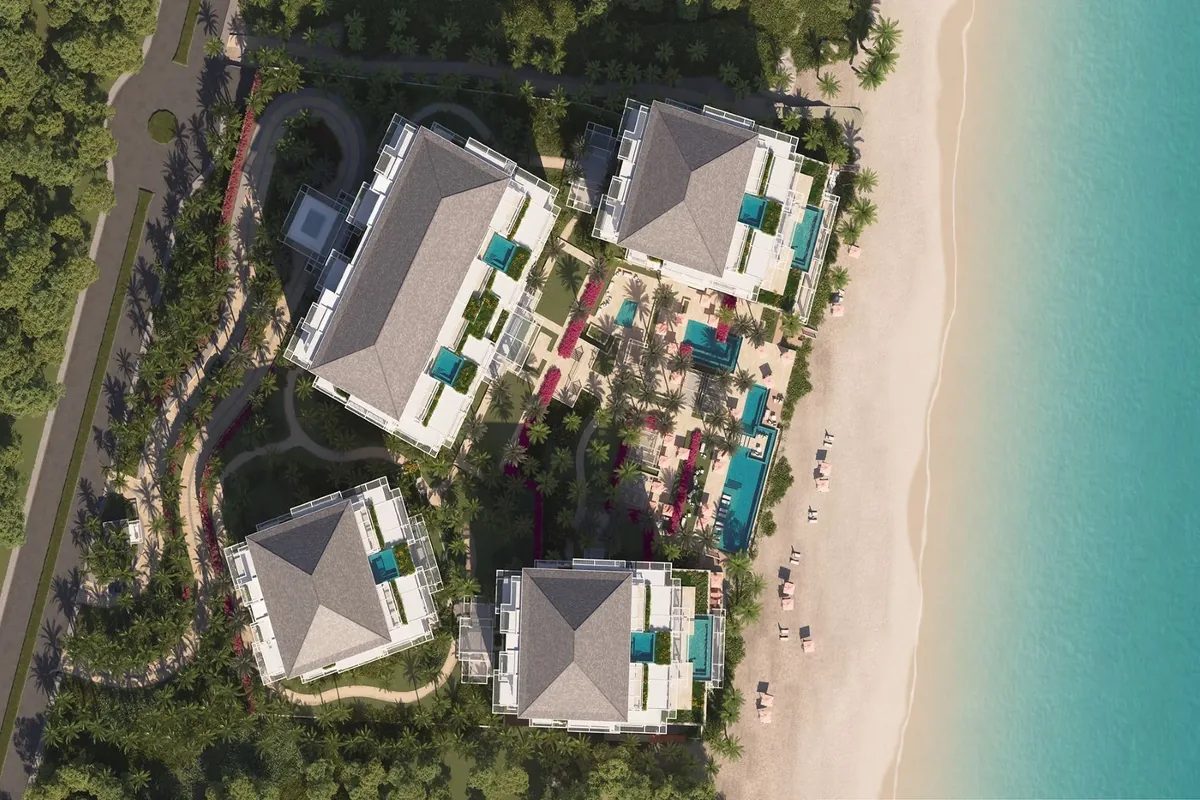
Request a ConsultationThe Ocean Club, Four Seasons Residences is a 67-unit oceanfront condominium being built on a 6.1-acre site on the north coast of Paradise Island, with the RIU on one side and Sunrise Beach Villas on the other. Four Seasons is the brand and manager; Two Roads Development and Access Real Estate are the developers. Access Industries has owned The Ocean Club since buying it from Brookfield Asset Management and its institutional partners in 2014, and brought Four Seasons in to run the resort at the end of 2017. Homes run from two-bedroom residences of about 3,124 square feet to two five-bedroom beach villas of 7,459 square feet with 6,604 square feet of terrace and a private pool. When the project was announced in January 2024, published pricing started at US$6.5 million. It now starts at about US$7.3 million, and one of the two beach villas was unveiled in February 2024 at roughly US$23 million and was still being marketed in mid-2026 at about US$23.3 million.
Here is the thing buyers get wrong, and it needs correcting most often. People believe they are buying into the 1962 Ocean Club itself — Huntington Hartford’s hotel, the Versailles-inspired gardens, the low buildings under the trees. They are not. This is a new building on a separate parcel a short walk along the sand. That sand is Cabbage Beach, which is public and stays public. The government secured a permanent, irrevocable easement, a new 15-foot-wide landscaped public access path through the site, and upgraded stalls for licensed Bahamian vendors at a nominal US$1 a month. None of that makes this a worse purchase. It makes it a different purchase from the one in most buyers’ heads. Underwrite it as what it actually is: a brand-new, brand-managed condominium next to a famous hotel, on a public beach, with a delivery date the published sources cannot agree on.
What ownership at the Ocean Club, Four Seasons Residences actually looks like
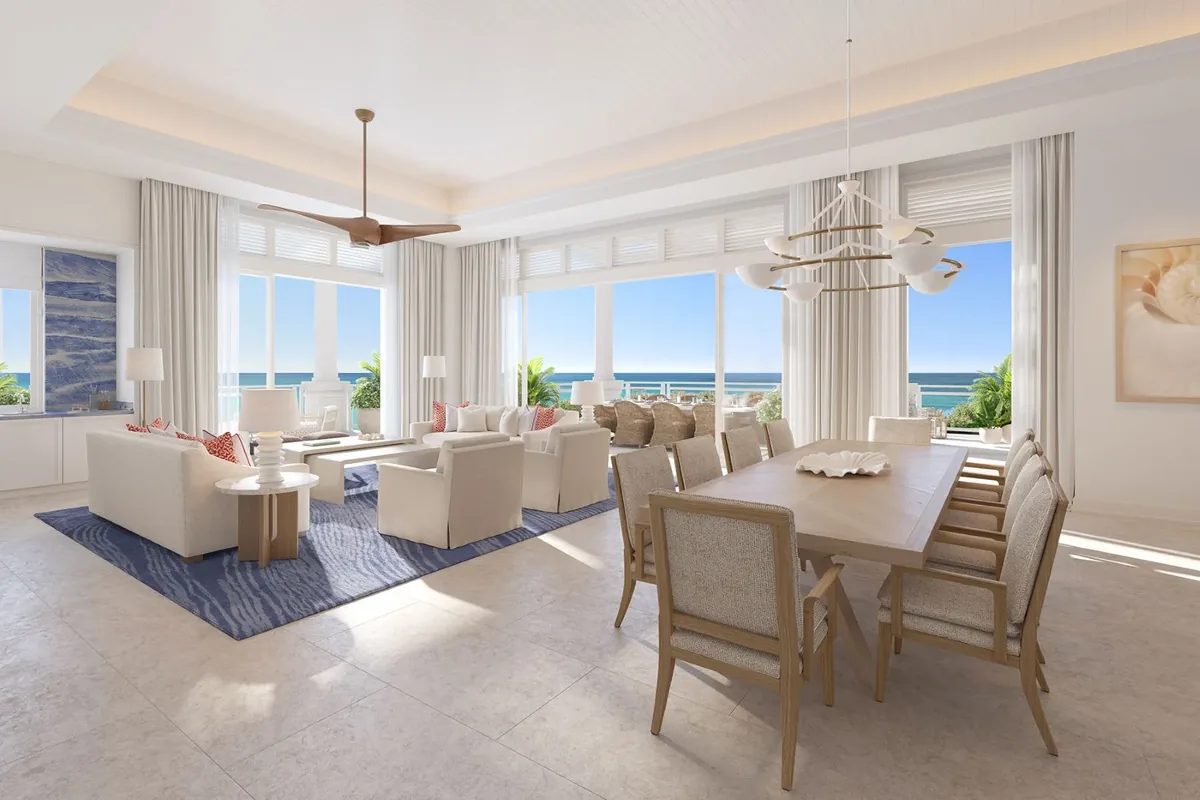
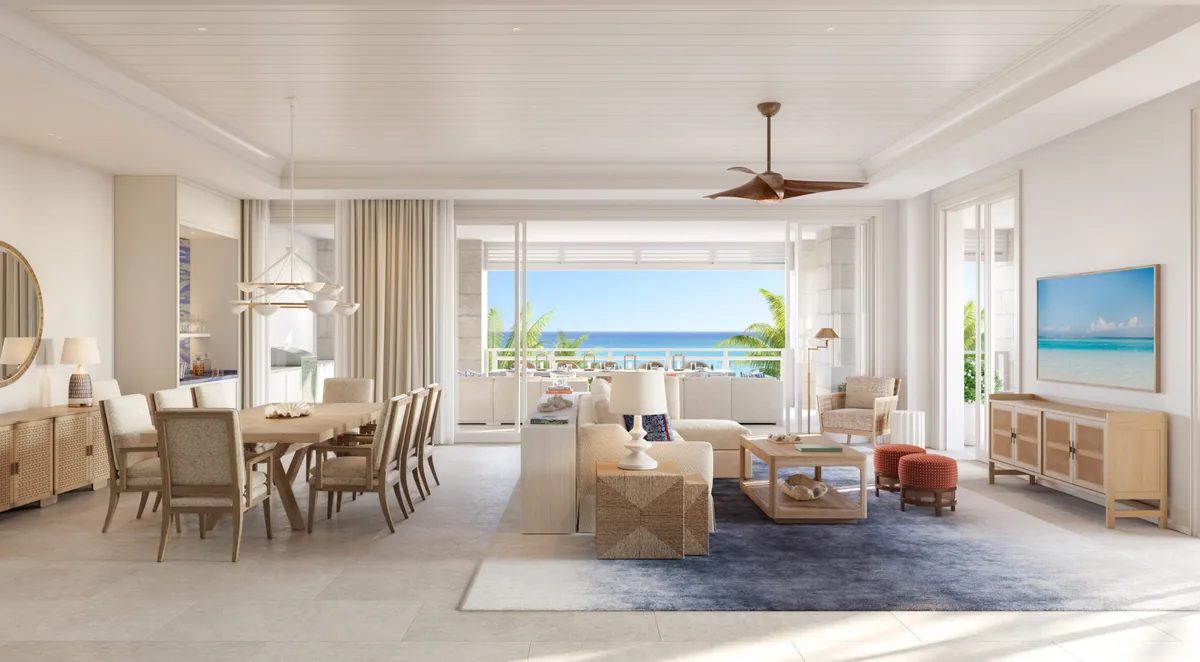
The sales material describes full-ownership condominiums, not fractions, not a right-to-use club. You take title to a specific unit, you can sell it, mortgage it or leave it to your children, and Four Seasons staff care for the home when you are not in residence. All 67 homes are described as turnkey. That matters more than it sounds: it removes an 18-month furnishing project, and it also removes your ability to control that budget. Ask for the schedule of finishes and the furniture inventory in writing, because "turnkey" is a marketing word until someone lists what is actually in the box.

The published mix, from the January 2024 launch release, is:
- Two-bedroom — 3,124 sq ft interior
- Three-bedroom — 4,073 sq ft interior
- Four-bedroom — 5,028 sq ft interior
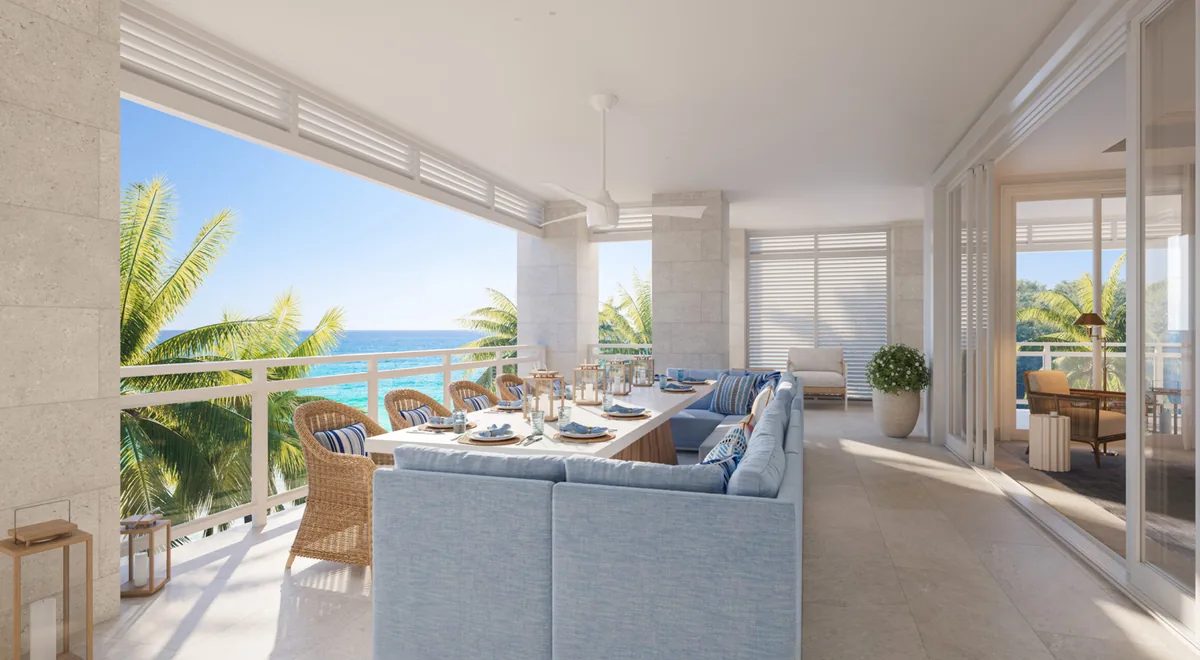
- Penthouses — 5,263 sq ft interior plus 3,917 sq ft of outdoor space
- Beach villas — 7,459 sq ft interior plus 6,604 sq ft of terrace and a private pool; only two exist
Before you go further, get the name straight, because three different things on Paradise Island share it. The Ocean Club, A Four Seasons Resort is the 1962 hotel, set on 35 acres with just over 100 rooms, DUNE by Jean-Georges, six lit Har-Tru courts and the Tom Weiskopf golf course. Ocean Club Estates is the older Kerzner-era gated community at the eastern end of the island. And Ocean Club Residences & Marina is a separate 88-unit condominium scheme on Paradise Island — four six-storey buildings with 51 marina slips taking yachts up to 120 feet — which is a resale market with two decades of trading history. The new Four Seasons Residences is none of those. Different parcel, different beach, different decade, and no resale history at all.
Foreign buyers face no meaningful ownership restriction in the Bahamas, but there is process. Under the International Persons Landholding Act, a non-Bahamian buying a first home for residential use registers the acquisition and takes a certificate of registration after closing. A second or subsequent purchase, or a purchase for investment or commercial use, requires a permit obtained before completion — and an acquisition that needed a permit and did not get one is rendered null and void. If you already own in the Bahamas, or if the unit is going straight into a rental pool as an investment, that distinction is not a formality. Settle it with your Bahamian attorney before you sign anything, not after.
And to answer the question that arrives every week: buying here does not lead to a passport. The Bahamas runs no citizenship-by-investment program of any kind. It offers residency, which is a different thing on a much longer timeline, and the thresholds are in the FAQs below.
The carrying costs, and the fee schedule you have not been shown
The Bahamas has no capital gains tax and no inheritance, estate or gift taxes. That is genuinely attractive and it is the reason most people are on this page. It is also not the whole picture, because the country collects its revenue at the point of transaction and on the asset itself.
- VAT on the conveyance. Non-Bahamian purchasers pay a flat 10% on the transfer regardless of value. On a US$7.3 million residence, that is US$730,000. Market custom in the Bahamas is for buyer and seller to split it 50/50, with each side also paying its own legal fees — but a developer’s contract can push the whole amount onto the purchaser. Find out which applies here before you negotiate on price, because it is worth more than any discount you are likely to win.
- The 180-day clock. Under the 2025 amendments to the International Persons Landholding Act, a permit holder must complete the VAT payment and notify the Chief Valuation Officer within 180 days. Permits can be extended by 180 days on notice and payment of the fee, but no permit may be extended more than twice. Do not assume someone else is watching that calendar.
- Legal fees. Around 2.5% of the price is the Bahamian norm, and the fee itself attracts 10% VAT on top. Each side pays its own lawyer.
- Commission. Around 6% on developed property, customarily borne by the seller, also plus VAT.
- Annual real property tax. An owner-occupied home pays nothing on the first US$300,000, 0.625% from US$300,000 to US$500,000 and 1% above that. There is a statutory annual ceiling on the owner-occupied charge, but it has been amended more than once in recent years and the current figure could not be pinned to an official source — get it from your attorney rather than from a brochure. The bigger point is which class you land in, and that is covered next.
That classification question is not academic. Inland Revenue’s own guidance puts foreign-owned rental property in the commercial class, which is assessed at 0.75% on the first US$500,000, 1% from US$500,000 to US$2 million and 1.5% above US$2 million, with no published ceiling. A unit you occupy yourself and a unit you rent out are taxed on completely different scales, and on a seven-figure home the gap is real money every year.
Then there is the number nobody has published: the residence association assessment. There is no public fee schedule for this project. On a Four Seasons-serviced building with restaurants, a spa, owners’ lounges and full hotel-grade staffing, this is the single largest unknown in your underwriting and it will outweigh the property tax every year you own. Before you commit, ask for the projected operating budget line by line, the reserve study, the FF&E replacement schedule, whether the Four Seasons management fee sits inside or outside the assessment, and what the developer’s subsidy is during lease-up and when it burns off. If the sponsor will not put a projected assessment in writing, that is information too.
One caveat that belongs on every Caribbean page: if you are a US citizen or green-card holder, none of the above changes your position at home. The United States taxes its citizens and permanent residents on worldwide income wherever they live, and renouncing citizenship is the only exit. A Bahamian address does not alter that.
Renting it out — and the condo-hotel tax that never makes the brochure
The sales material tells owners that Four Seasons will manage the rental of their residence and that doing so "offers tax benefits through the Bahamas’ Hotels Encouragement Act." That much is standard for a branded residence. The Bahamian tax mechanics behind it are not standard, and they are where the real decision sits.

Under the Hotels Encouragement Act, a residence placed in a resort rental program can be exempt from real property tax for 20 years. Read the qualifying condition before you count on it. The unit must be available for rent through the resort’s reservation system for not less than nine months of every year, across the whole 20-year period. That is a two-decade commitment, and if you sell inside the period the obligation runs to your buyer, who must commit to the balance of the term. Three months of personal use a year, in a home you paid seven or eight figures for, is the price of the exemption. For some buyers that is a fair trade. For the buyer who wants the family there all winter, it is not a trade at all — and the moment the unit stops qualifying, it is taxed as property you do not occupy.
Since 2023 there has also been a floor under the exemption. A separate condo-hotel tax applies to units in a hotel rental pool, calculated off the residential real property rate and subject to an annual cap per unit; the rates and the cap are on the Bahamas real-estate guide. Net VAT generated by renting that specific unit is offset against the charge, so a home that rents well pays little or nothing and a home that sits idle in the pool still pays. The hotel administrator and the owner are jointly and severally liable for it. Rental income also carries VAT at the standard 10%, which the resort manager normally registers for and remits.
So the summary is this: the tax exemption is not free, it is bought with control, and it comes with a minimum annual charge if the unit underperforms. No rental program terms for this project have been published. Before you rely on any projection, get these in writing.
- Whether participation is optional or a condition of purchase.
- The revenue split.
- Whether your owner-use nights come out of the same inventory the resort is selling.
- The blackout dates around Christmas, New Year and Easter.
- The FF&E reserve contribution charged against your distributions.
- Who pays for the mandatory refresh cycle.
- Whether the building’s Hotels Encouragement Act concession depends on a minimum number of owners participating.
If it does, your neighbours’ decisions affect your tax bill.
What the case actually rests on
Be clear about what the case for this actually rests on, because it is narrower than the marketing suggests and it is worth testing on its own terms.
- Scarcity. 67 homes, two beach villas, and a hotel operator with a long record attached to the servicing. That is real, and it is the reason the published entry price has moved from US$6.5 million at announcement to about US$7.3 million. The cost of it is that you are underwriting an unbuilt asset with no resale track record for this exact product, on a public beach, with an undisclosed fee schedule.
Stated plainly: brand scarcity supports pricing at launch far better than it supports pricing at resale. The buildings that hold value are the ones where the service actually stays at the promised standard for twenty years and the association is competently run. That is unknowable today for a project that has not opened. If you need this to be an investment first, the resale market on Paradise Island gives you evidence and this one gives you a thesis. If you want the new building and the Four Seasons service and you are buying it to use, that is a perfectly rational purchase — just do not let anyone sell it to you as the safer of the two.
What to raise before you sign
These are the points worth putting on the table unprompted. None of them is a reason not to buy. All of them are better heard now than discovered at closing.

- The published delivery date does not agree with itself. The January 2024 launch release said the residences were anticipated to open in 2027. Local reporting at the January 2025 groundbreaking put completion in 2028, and Forbes used 2028 in July 2025 — while Caribbean trade coverage in June 2026 was back to 2027. Ignore all of it and ask for the contractual outside date in the purchase agreement, which is a different number from the marketing one, and ask what your remedy is if it passes.
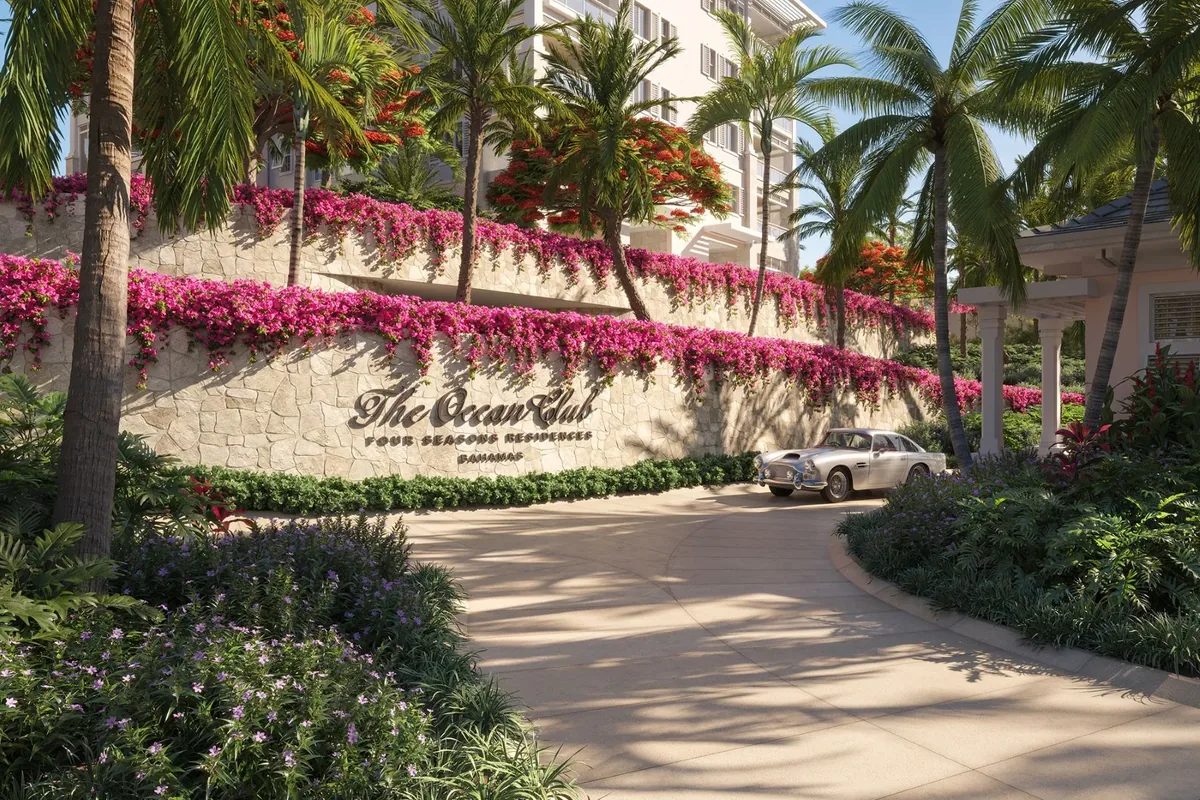
- Everything you have seen is a rendering. The imagery is developer CGI — SB Architects on the buildings, Champalimaud Design on the interiors. There is no completed residence to walk. Ask when a finished model unit will exist and whether your deposit schedule can be timed to it.
- Your deposits. Where are they held, in whose name, under what escrow terms, and are they released to fund construction? On an off-plan purchase this is the most important paragraph in the contract and it is never the one buyers read first.
- Atlantis privileges are not yours by deed. Access Industries bought The Ocean Club from Brookfield in 2014; Atlantis is a separate resort under separate ownership. Any access arrangement between the two is a commercial agreement between unrelated companies, and nothing could be found confirming that owners at the new Residences get any Atlantis rights at all. If that matters to you, get the terms and duration in writing and assume it can end.
- The beach is public and the neighbours are hotels. Cabbage Beach access is guaranteed by a permanent, irrevocable easement and a public path running through the site, and the parcel sits between the RIU and Sunrise Beach Villas. Go and stand there on a Saturday in season before you decide how you feel about it.
- Storm risk and insurance. Hurricane Dorian made landfall on Abaco on 1 September 2019 as a Category 5 with 185 mph sustained winds; total damage across the Bahamas was assessed at roughly US$3.4 billion, and New Providence lost power island-wide even though it was outside the eye. Ask for the building’s insurance program, the named-windstorm deductible per occurrence, and how a deductible of that size is funded — from reserves, or from a special assessment on you.
- Thin resale by design. Sixty-seven units is the scarcity argument and the liquidity problem in the same sentence. If four owners list at once in a soft year, that is a meaningful share of the building.
Having the purchase agreement, the association budget and the rental programme documents read properly before you commit is the work that matters here.